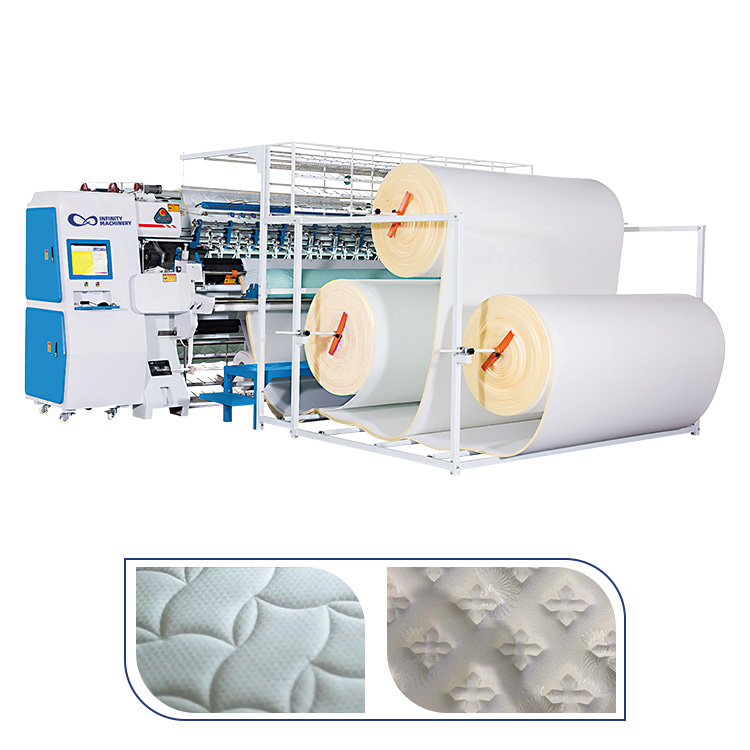
The night shift question starts with the bill structure: the factory power bill is the sum of the energy charge, the demand charge and the time-of-use split, and the two levers the night shift pulls are the demand charge and the off-peak price. The tariff gap in the export markets runs the off-peak night hours at the 30-50 percent below the peak price. The shiftable load splits the factory: the continuous machines (quilting, spring lines and compressors), the batch machines (foaming) and the buffered machines (compression and packing) move to the night, while the manual assembly and the inspection stay on the day, and the IF-Q-1200 Multi-Functional Quilting Machine, the IF-FF3 Automatic Box Foaming Machine and the IF-CR8 Compression and Roll Packing Machine carry the shiftable load. The 15 percent math adds the 10 percent price saving, the 3-5 percent demand saving and the small efficiency bonus.
The night shift question starts with the bill structure, and the factory power bill is not one price but the sum of the energy, the demand and the taxes. The energy charge is the first component: the kilowatt hours the factory consumes, priced at the rate of the tariff and multiplied by the total consumption of the month, so the energy charge is the volume line. The demand charge is the second component: the highest 15 minute power draw of the month, priced per kilowatt and billed whether the peak happened once or every day, so the demand charge punishes the simultaneous start and rewards the spread load. The time-of-use split is the third component: the many industrial tariffs price the peak, the shoulder and the off-peak hours differently, the off-peak night hours often run the 30 to 50 percent below the peak price and the weekend and the night windows carry the cheapest rate
The tariff gap is the difference between the peak and the off-peak price, and the gap is the fuel of the night shift decision. The typical industrial tariff in the export markets runs the peak hours from the late morning to the evening, the off-peak window from the late night to the early morning and the shoulder hours between them, and the off-peak price lands the 30 to 50 percent below the peak price The second shape is the demand window: the factory that runs the compressors, the quilting machines and the presses in the peak hours adds its load to the grid peak and pays the peak price, while the same machines in the night window pay the off-peak rate and draw against the grid trough The third shape is the seasonal and the regional variation: the summer cooling peak pushes the afternoon price higher, the winter evening peak shifts the window and the specific tariff of the region sets the real gap
The shiftable load is the part of the factory that can run at night, and the heavy continuous machines shift best while the manual stations stay on the day. The first shiftable group is the continuous process machines: the quilting machines, the spring lines and the compressors run for the hours at the steady draw, the IF-Q-1200 Multi-Functional Quilting Machine quilts the covers unattended through the night and the run shifts the steady kilowatts into the cheap window; the continuous is the first group. The second shiftable group is the batch process machines: the IF-FF3 Automatic Box Foaming Machine pours the foam batch by batch with the stored formulas, the batch starts before the night window and finishes in it and the foaming heat load moves with the batch schedule; the batch is the second group. The third shiftable group is the storage and the buffer processes: the IF-CR8 Compression and Roll Packing Machine packs the finished units into the export packets, the packing buffer fills during the day and empties at night and the compression cycle runs its heavy motor in the off-peak window; the buffer is the third group. The non-shiftable group is the manual and the inspection work: the assembly, the quality checks and the loading need the operators and the daylight supervision
The 15 percent math adds the three savings that the night shift delivers, and the sum is the case for the shift change. The energy price saving is the first line: the factory with the 40 percent tariff gap that moves the quarter of its kilowatt hours into the night saves the 10 percent of the energy charge, and the quarter of the load is the realistic share for the continuous and the buffered machines The demand charge saving is the second line: the peak 15 minute draw drops when the heavy motors no longer start in the peak window, the demand charge on the industrial tariff runs the 10 to 15 percent of the bill and the lower peak cuts that line by the third to the half The efficiency bonus is the third line: the night runs at the cooler ambient temperature, the compressors and the motors run the slightly better efficiency, the night window also avoids the afternoon brownouts and the voltage dips that stall the machines The sum math: the 10 percent price saving plus the 3 to 5 percent demand saving plus the small efficiency bonus lands the 15 percent target on the factory with the real tariff gap,; the sum is the target check.
The staffing trade is the honest ledger of the night shift, and the electricity saving is not free of the labor cost. The night premium is the first line: the factory pays the night differential of the 10 to 30 percent on the night hours, the differential covers the 2 to 4 night operators of the continuous machines and the premium eats into the electricity saving The supervision line is the second: the night shift needs the one supervisor, the safety coverage and the maintenance standby, the night team is smaller but still carries the fixed supervision cost The safety line is the third: the night hours carry the higher fatigue and the lower visibility, the factory adds the lighting, the check-in and the emergency procedures and the night operations need the extra diligence The trade math: the night premium and the supervision typically run the 30 to 60 percent of the electricity saving, and the factory with the 15 percent bill reduction keeps the net 6 to 10 percent after the staffing costs, so the net saving is the real number the decision uses; the trade is the net check.
The implementation path moves the load in the four steps that protect the output while the bill drops. Step one is the measurement: the factory reads its own tariff sheet for the peak, the shoulder and the off-peak prices, logs the machine load by the hour for the two weeks and computes the shiftable share and the demand peak Step two is the pilot: the factory moves the one continuous line, for example the quilting, to the night for the two weeks, the pilot keeps the day output unchanged by filling the buffer and measures the actual energy and the demand change on the bill Step three is the scale: the factory adds the batch foaming and the compression packing to the night schedule, the night team grows to the 2 to 4 operators and the machines run the schedule that fills the off-peak window Step four is the monitor: the factory reads the bill monthly, compares the actual kilowatt hours and the demand peak against the baseline and re-balances the schedule when the tariff or the demand changes The path rule: the factory that measures, pilots, scales and monitors the night load keeps the output flat and the bill lower, and the 15 percent target is the reward of the disciplined shift plan; the rule is the path verdict.
Contact our energy team for the night shift calculator, the machine load log template and the automatic quilting, foaming and packing machines that run the off-peak window for your factory.