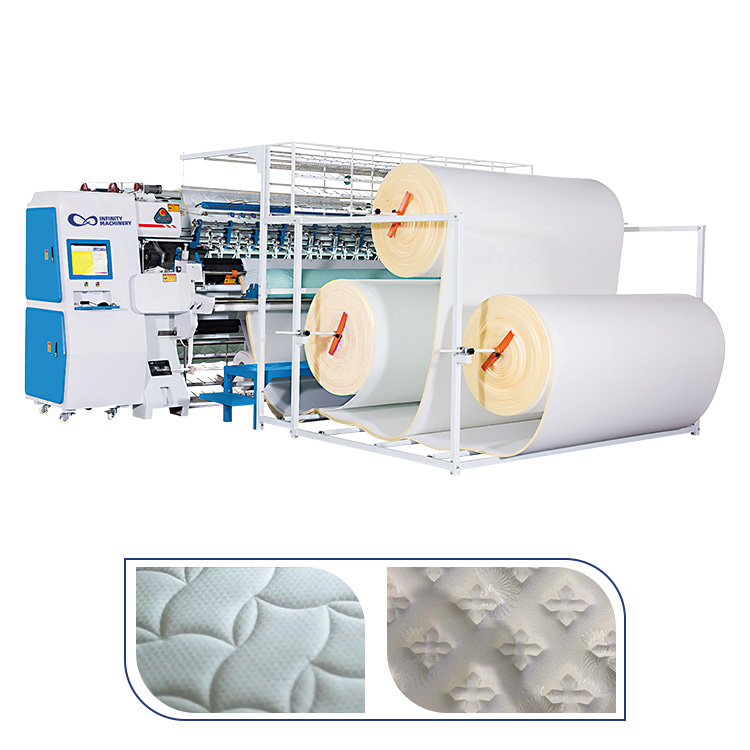
The refurbished question sits at the crossroads of the machinery budget and the output target: the used machine at the 40-60 percent below the new price looks like the free capital, and the inspection decides whether the bargain is the smart line or the expensive paperweight. The refurbishment scope turns the used machine into the dependable line: the mandatory safety and bearing work, the conditional wear replacements from the inspection and the optional modernization that extends the life. The three process stages of the mattress factory follow the same logic: the IF-CR8 Automatic Compression and Roll Packing Machine in the packing stage, the IF-Q-1200 Multi-Functional Quilting Machine in the quilting stage and the IF-BA Automatic Spring Assembling Machine in the spring stage.
The refurbished question starts with the price gap that makes the used machine tempting, and the gap is real but the risk sits in the details. The new machine carries the full price, while the used machine typically sells at the 40 to 60 percent below the new price The third reality is the market shape: the well-maintained used line with the full service history is rare and moves fast, while the abused machine without the records lingers and drops in price
The inspection map is the structured walk that the buyer completes before any price talk, and the four dimensions are the mechanical, the electrical, the hydraulic and the control. The mechanical dimension is the first stop: the buyer checks the frame for the cracks and the re-welds, the guide rails for the scoring, the shafts and the bearings for the heat and the looseness The electrical dimension is the second stop: the buyer opens the cabinet and checks the contactors, the relays and the terminals for the burn marks and the corrosion, the motors for the bearing noise and the winding smell and the cables for the cracked insulation and the pinched runs The hydraulic and the pneumatic dimension is the third stop: the buyer runs the cylinders and the valves through the cycles, watches for the slow travel, the drift and the leaks and checks the oil for the metal particles and the water The control dimension is the fourth stop: the buyer powers the machine and watches the PLC and the HMI boot
The wear reading translates the inspection findings into the remaining life, and the wear concentrates in the parts that move against the friction every shift. The first wear group is the linear motion: the quilting head rails, the press platens, the conveyor tracks and the slide ways wear the guide surfaces The second wear group is the rotating parts: the bearings, the spindles and the gearboxes carry the hours, and the full bearing set replacement is the standard refurbishment line item The third wear group is the consumable contact: the quilting needles and the presser feet, the cutting blades, the springs in the coiling heads and the seals in the cylinders wear by design, the consumables are the cheap items but their condition reveals the maintenance culture of the previous owner.
The refurbishment scope is the written list of the replacements that turn the used machine into the dependable line, and the scope divides into the mandatory, the conditional and the optional work. The mandatory scope covers the safety and the reliability items: the bearings, the seals, the hoses, the electrical safety components and the guarding, so the mandatory items go in the quote before the price talk. The conditional scope covers the wear that the inspection found: the re-ground or the replaced rails, the re-built spindles, the replaced motors with the bearing damage and the re-wound or the replaced coils, so the buyer prices the conditional items against the dial-indicator readings. The optional scope covers the modernization that extends the life: the new control panel with the touch screen, the frequency drives on the main motors, the new sensor set and the remote diagnostic module, so the buyer weighs the optional items against the machine remaining life. The scope rule: the refurbished machine matches the new output only when the mandatory and the conditional items are fully executed by the shop that documents the work.
The cost math adds the hidden lines to the purchase price, and the total cost of the refurbished machine is the price plus the rebuild plus the downtime. The purchase price is the first line: the used machine at the 40 to 60 percent below the new price looks like the bargain The rebuild cost is the second line: the mandatory and the conditional scope typically adds the 15 to 25 percent of the new price at the rebuild shop, so the buyer compares the used price plus the rebuild against the new machine with the warranty The downtime risk is the third line: the rebuilt machine carries the residual risk of the unknown failures in the first months, so the buyer budgets the spare parts and the service response into the total The comparison math: the used machine at 50 percent of the new price plus the 20 percent rebuild equals the 70 percent of the new cost with the remaining life of five to eight years, and the payback of the 30 percent saving runs the one to two years against the new machine output.
The deal checklist is the sequence that protects the buyer from the first call to the final commissioning, and the sequence has the six gates. Gate one is the paperwork: the buyer requests the machine photos, the serial number, the year, the service records and the original manual Gate two is the video test: the buyer asks for the running video of the machine making the actual product at the operating speed Gate three is the on-site inspection: the buyer or the paid technician spends the three to five days on the floor with the dial indicator, the thermal camera and the run test, completes the four-dimension map Gate four is the rebuild agreement: the buyer signs the scope, the timeline and the acceptance criteria with the rebuild shop before the machine ships Gate five is the transport: the machine ships on the dedicated truck with the proper bracing and the machine arrives to the rebuild shop or the factory in the same condition it left Gate six is the commissioning and the warranty: the rebuilt machine is commissioned at the buyer factory, the operator training runs on the machine itself and the rebuild shop warranty of the six to twelve months covers the rebuilt components
Contact our machinery team for the used-machine inspection checklist, the refurbishment scope template and the comparison sheet that prices the used machine against the new line for your output target.