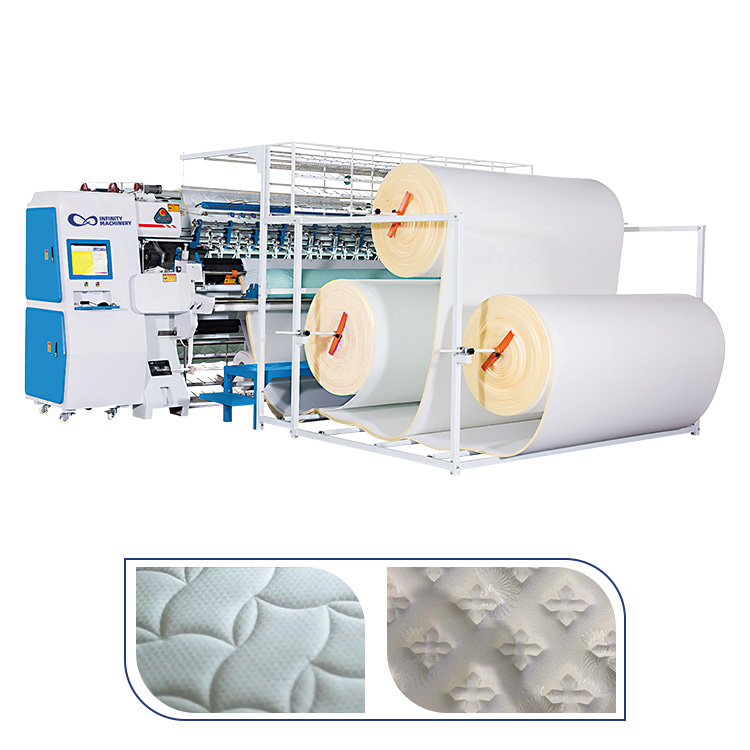
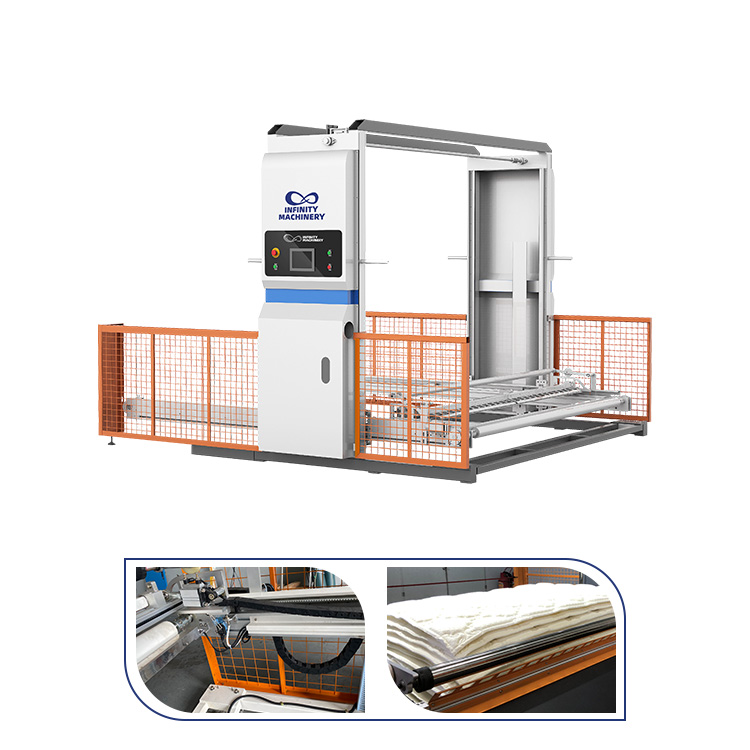
The needle overheats because the friction is the heat source, and the memory foam core that resists the needle turns the kinetic energy of the stitch into the thermal energy that snaps the needle and scorches the thread. The high-density memory foam is the worst case: the viscoelastic material closes around the needle, the resistance builds with the depth, and the needle that runs at the speed of the open-cell foam runs too hot in the viscoelastic core. The heat does the damage in the four ways: the needle tip softens and bends, the thread melts and frays at the eye, the foam scorches and discolors around the stitch, and the skipped stitches appear as the needle drags through the dense material. The fixes are the layered approach: the speed reduction for the dense cores, the correct needle point and the coating, the thread lubricant and the needle cooler, and the maintenance that checks the needle for the wear before it snaps. The IF-Q-1200 Computerized Multi-Functional Quilting Machine, the IF-QM1-4 Automatic Lock Stitch Quilting Machine and the IF-QC-1 Computerized Panel Cutter run the needle protocols that the high-density cores demand.
The needle becomes the heat source because the friction is the only energy input, and the stitch that should take the fraction of the second takes the full resistance of the dense foam. The needle enters the memory foam and the viscoelastic material does not part like the open-cell foam, it compresses, closes around the shaft and drags against the metal over the whole depth of the stroke. The friction converts the mechanical work into the heat at the point of contact, and the needle that runs the eight hundred to the thousand stitches per minute accumulates the heat faster than the material can carry it away. The density is the multiplier: the higher the foam density, the greater the resistance per millimeter of travel and the hotter the needle at the same speed, so the 50 kg/m3 core runs the needle hotter than the 25 kg/m3 core by the wide margin. The depth is the second multiplier: the thick pillow-top panel keeps the needle in the material longer per stitch, and the longer contact time builds the heat that the shallow quilting never sees. The speed is the third multiplier: the machine that runs the open-cell speed in the viscoelastic core doubles the heat input while the cooling path stays the same. The physics rule: the needle temperature is the density times the depth times the speed, and the operator who controls the three variables controls the heat before the needle snaps.
The overheated needle damages the line in the four ways, and the damage appears as the production problem before it appears as the needle problem. The first mode is the needle softening: the steel loses the temper above the working temperature, the tip bends on the next entry, the bent needle skips the loop and the bent needle that keeps running breaks the needle plate and the bobbin case. The second mode is the thread melt: the thread passes through the eye of the hot needle, the synthetic core of the thread softens at the working temperature, the thread frays and breaks at the eye and the machine stops for the rethread, and the broken thread during the quilting run ruins the panel that was under the needle. The third mode is the foam scorch: the hot needle burns the memory foam around the stitch channel, the foam discolors to the brown or the yellow at the surface, the smell of the burning foam fills the line and the scorched panel is rejected at the inspection. The fourth mode is the skipped stitch: the hot needle drags through the dense core, the timing shifts as the needle bends, and the skipped stitches appear as the gaps in the pattern that the operator catches only after the roll is finished. The damage rule: the needle that runs too hot does the four kinds of damage in the same shift, and the factory that watches only the needle replacement rate misses the rejected panels and the rethread downtime that the heat actually costs.
The speed reduction is the first and the cheapest lever, and the thirty to forty percent speed cut brings the needle temperature back to the safe window without the new hardware. The principle is the heat balance: the needle cools by the air between the stitches and by the material it passes through, and the cooling between the stitches is fixed while the heat per stitch is fixed, so the only variable that changes the balance is the number of the stitches per minute. The speed drop of the thirty to forty percent cuts the heat input by the same proportion while the cooling stays constant, and the needle temperature falls below the thread melt point. The production trade is the real question: the line that drops the speed by the thirty percent loses the thirty percent of the panel output, and the trade is worth it when the alternative is the needle snaps, the rethreads and the rejected panels that cost more than the lost speed. The selective speed is the better answer: the memory foam panels run at the reduced speed while the open-cell and the cotton panels run at the full speed, and the machine that stores the speed recipes per the panel type switches automatically. The ramp is the third part: the speed is reduced gradually through the seam and the density change, because the sudden speed change at the dense patch shocks the needle and the thread. The speed rule: the thirty to forty percent cut is the first fix because it costs nothing, and the factory that pairs the recipe-based speed with the needle selection solves most of the heat problem before the cooling hardware is needed.
The needle geometry is the second lever, and the right point, the coating and the eye shape reduce the friction at the source. The point is the first choice: the memory foam calls for the ball point or the rounded point that parts the fibers instead of cutting them, and the round point slides through the viscoelastic core with the less resistance than the sharp point that bites and drags. The coating is the second choice: the coated needle (the titanium, the ceramic or the PTFE-coated) reduces the coefficient of the friction against the foam, and the coated needle runs the ten to twenty degrees cooler than the bare steel needle at the same speed. The eye is the third choice: the large eye with the smooth edges lets the thread pass with the less drag, and the burr or the sharp edge in the eye is the thread cutter that snaps the thread at the worst moment. The size is the fourth choice: the needle that is the size for the thread and the fabric runs with the minimum clearance, and the oversized needle pushes the foam aside with the extra force while the undersized needle flexes and heats. The change interval is the fifth part: the needle for the memory foam changes on the schedule (the shift or the two shifts) before the wear builds, because the worn needle with the dull point and the rough eye runs hotter than the new needle from the first stitch. The geometry rule: the ball point, the coated shaft, the smooth large eye and the scheduled replacement together cut the friction enough that the speed reduction can be halved.
The cooling options are the third layer, and the lubricant, the air blast and the needle cooler attack the heat directly. The thread lubricant is the first option: the silicone or the wax-based lubricant applied to the thread reduces the friction at the eye and the needle drag, and the lubricated thread runs through the hot needle without the melt. The air blast is the second option: the compressed air nozzle aimed at the needle point between the stitches carries the heat away with the forced convection, and the small air blast drops the needle temperature the twenty to thirty degrees at the minimal cost. The needle cooler is the third option: the dedicated needle cooling unit (the air-cooled or the liquid-cooled collar) wraps the needle shaft and draws the heat continuously, and the cooler keeps the needle at the constant low temperature even at the full speed. The foam release agent is the fourth option: the light application of the release spray on the needle shaft reduces the adhesion between the metal and the viscoelastic foam, and the reduced adhesion cuts the friction that generates the heat. The combination rule: the lubricant and the air blast together allow the higher speed on the dense cores, and the dedicated cooler allows the full speed, so the factory that needs the maximum output on the memory foam invests in the cooler while the factory with the mixed production starts with the lubricant and the air.
The maintenance protocol is the fourth layer, and the checks that catch the needle wear before the snap keep the line running. The heat check is the first: the operator touches the needle or the machine uses the thermal probe after the thirty minutes of the run, and the needle that is too hot to hold is the needle that is running into the danger window. The visual check is the second: the needle is inspected for the dull point, the rough eye, the discoloration (the blue or the brown heat tint) and the slight bend, and the needle with the heat tint or the bend is replaced before the next panel. The timing check is the third: the needle bar timing is verified against the hook, because the mistimed hook pulls the loop with the extra tension that heats the needle. The tension check is the fourth: the thread tension that is too high drags the thread through the eye and adds the heat, and the tension is set to the minimum that still forms the clean stitch. The needle plate check is the fifth: the needle plate and the presser foot with the worn hole or the burr add the resistance to the needle path, and the worn plate is replaced or dressed. The protocol rule: the five checks (heat, visual, timing, tension, plate) run at the shift start and at the needle change, and the factory that follows the protocol replaces the needle on the schedule instead of after the snap, the rethread and the rejected panel.
Contact our team for the needle selection, the cooling options and the IF-Q-1200, IF-QM1-4 and IF-QC-1 quilting line that runs the dense cores without the friction snaps.