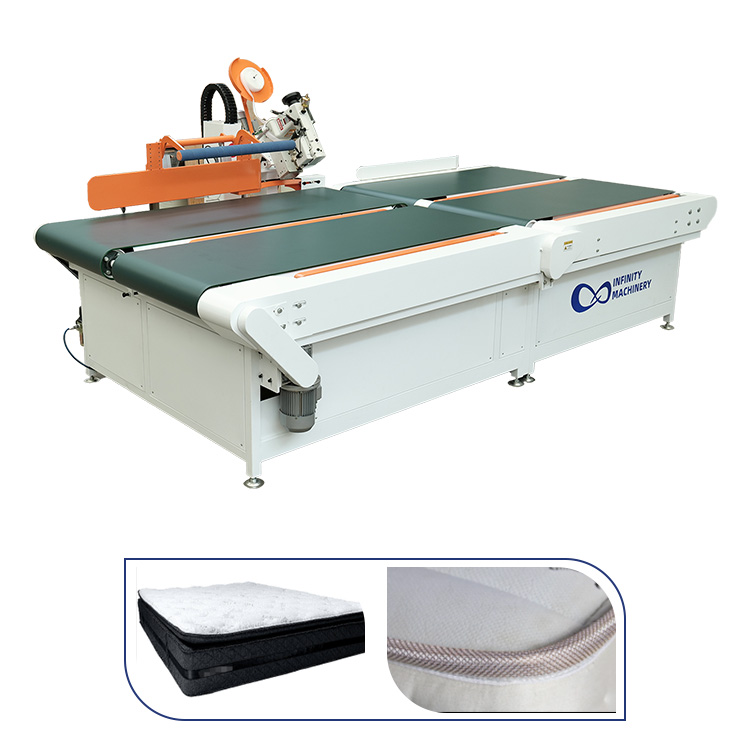
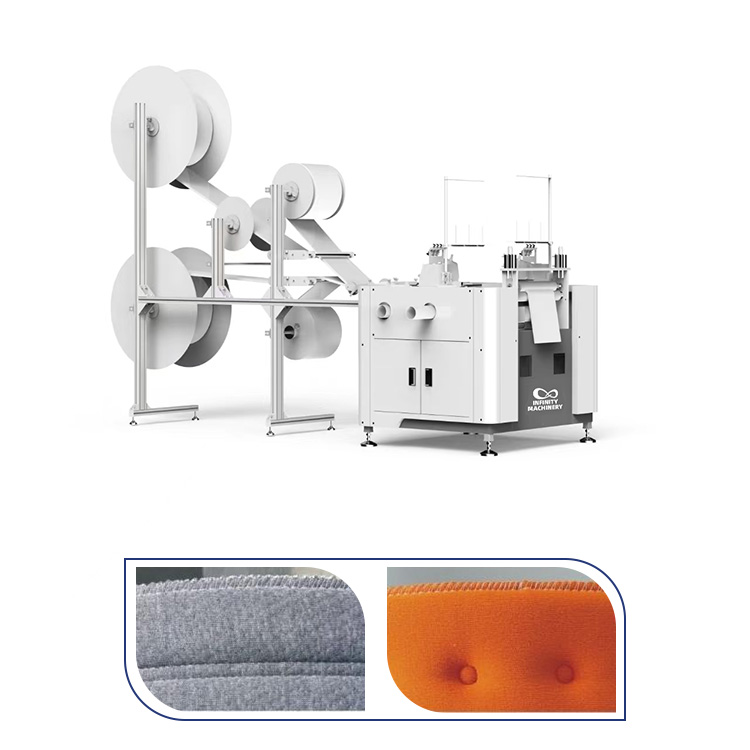
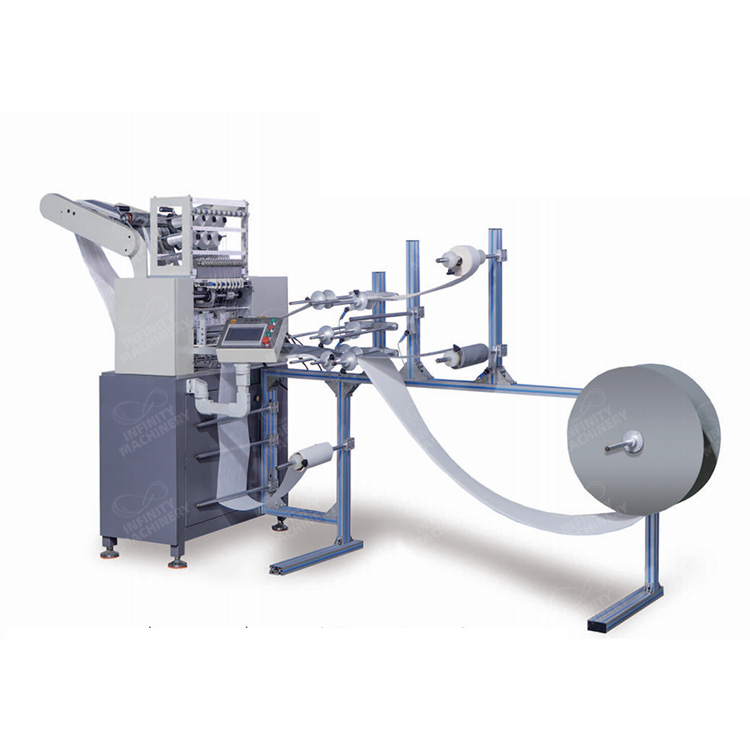
The border sewing speed is the number the factory quotes and the number that decides how many mattresses the line finishes in the shift, and the 10m/min target is the speed the modern tape edge machine reaches while most factories sew at the 2 to 4 meters a minute. The border line is the station that sews the tape around the mattress edge, the tape that joins the top panel, the border fabric and the bottom panel into the finished unit, and the station runs at the speed of the slowest link: the needle, the feed, the operator, the changeover or the layout. The speed physics is simple and the practice is not: the needle can sew the 10 meters a minute, but the operator loads the mattress, turns the corners, changes the thread and clears the jams, and each stop cuts the average below the needle rating. The modern tape edge machine removes the stops: the automatic feed moves the mattress through the needle at the set speed, the servo-controlled head maintains the stitch length on the straight run and the corner, and the machine sews the border at the 10 meters a minute while the operator handles the loading and the unloading. The IF-T4 Automatic High Speed Mattress Tape Edge Machine, the IF-SB-A2 Front and Back Double-heads Mattress Sewing Machine and the IF-SZX1 Linear Machine are the machine cases this guide maps. This guide walks the speed physics, the hidden bottlenecks, the machine cases and the acceleration plan.
The speed question is the productivity question of the border line, and the 10m/min target needs the honest math before the machine decision. The border sewing speed is the meters of tape that the needle sews in the minute, and the meters translate into the mattress cycle: the mattress of the 2.0 by 1.8 meter size has the border perimeter of about 7.6 meters, so the 10m/min needle sews the border in about 46 seconds of needle time, and the line that holds the 46 seconds plus the load and the turn times finishes the unit in the 60 to 75 seconds. The honest math must separate the needle speed from the cycle speed: the needle speed is the machine rating, the 10 meters a minute, and the cycle speed is the real time from the loading to the unloading, the needle time plus the operator time plus the changeover time. The factory that quotes the 10m/min and finishes the twelve units an hour is running the effective 1.5 meters a minute, because the stops eat the needle speed: the loading stops the feed, the corner turning slows the mattress, the thread change stops the needle and the jam clears stop the line. The 10m/min target is not the needle rating, it is the line discipline: the needle that sews the full shift without the avoidable stops, the feed that moves the mattress without the operator hesitation and the changeover that runs in the seconds instead of the minutes. The speed question is the gap between the needle rating and the cycle reality, and the gap is where the border line hides its lost output.
The table separates the needle from the cycle, and the 10m/min target is the cycle discipline, not the needle spec.
The hidden bottlenecks are the reasons the border line never runs at the needle rating, and the bottlenecks hide in the four places the factory does not measure. Bottleneck one is the manual feed: the operator pushes the mattress through the needle by hand, the push speed varies with the operator, the fatigue and the shift hour, and the average push speed lands far below the needle capacity; the automatic feed removes the human pace and holds the constant speed. Bottleneck two is the corner: the border tape must turn the four corners of the mattress, the turn needs the needle lift and the mattress rotation, and the manual turn takes the 10 to 20 seconds per corner, the 40 to 80 seconds per mattress that doubles the cycle; the modern machine handles the corner with the automatic lift and the feed control that cut the turn to the seconds. Bottleneck three is the changeover: the thread change, the tape roll change and the size adjustment stop the needle, and the line that changes the thread every two hours loses the 10 minutes each time, the 80 minutes a shift that the factory never logs; the quick-change design and the prepared setup cut the changeover to the minutes. Bottleneck four is the layout: the mattress arrives from the quilting line, the border machine waits for the delivery, the operator walks to the stack and the finished units wait for the removal; the line that feeds the border machine directly and removes the output with the conveyor keeps the needle busy. The four bottlenecks are the difference between the rated speed and the real output, and the factory that attacks the four holds the 10m/min that the needle already offers.
Manual feed: the push speed varies with operator and fatigue, lands below the needle | Corners: 10-20s per corner manual turn, 40-80s per mattress | Changeover: thread, tape roll and size stops, 10 min per change | Layout: delivery waits, walks and removal waits idle the needle
The machine math compares the manual border station and the automatic tape edge machine, and the numbers make the upgrade case. The speed: the manual operator sews the 2 to 4 meters a minute with the push and the turn, and the automatic machine holds the 10 meters a minute with the feed and the servo head, the 2.5 to 5 times speed difference that the cycle time shows. The cycle: the manual station completes the standard mattress border in the 3 to 5 minutes including the turns and the stops, and the automatic machine completes the same border in the 60 to 75 seconds, the 3 to 4 times cycle gain. The labor: the manual station ties the operator to the needle for the whole cycle, and the automatic machine frees the operator for the loading, the unloading and the second machine, the one operator running the two machines and the border labor per mattress dropping by the 40 to 50 percent. The quality: the manual stitch length varies with the push speed, the tight and the loose stitches mix along the edge, and the automatic feed holds the constant stitch length that the servo sets, the even seam that the inspector and the customer see. The throughput: the manual station finishes the 12 to 16 mattresses an hour, and the automatic line finishes the 40 to 55, the 3 times output from the same floor space. The machine math: the border station is the bottleneck of the mattress line, and the automatic machine removes the bottleneck at the 3 times output that the shift can ship.
The table is the upgrade case, and the 3 times output from the same floor is the argument the owner can count.
The machine fit matches the border machine to the line volume and the product mix, and the fit runs through the three cases. The high-volume line that sews the standard mattress border runs the automatic tape edge machine: the IF-T4 holds the 10m/min on the straight run and the corner, the wide work table handles the queen and the king sizes, and the high-speed chain stitch head sews the border that the box spring and the innerspring mattresses need. The line that sews the front and the back in one pass runs the double-head machine: the IF-SB-A2 carries the two heads that sew the front and the back simultaneously, the direct drive servo keeps the heads synchronous and the machine halves the border time for the two-sided tape construction. The line that adds the value features runs the linear machine alongside: the IF-SZX1 places the decorative tapes, the 3D mesh and the zippers on the edge, the features that the retail buyer pays the premium for, and the machine adds the features without slowing the main border pass. The fit also covers the sizes: the machine table is sized to the mattress range, the corner handling adapts to the height and the thickness, and the changeover between the sizes runs in the minutes with the quick adjustments. The fit is the volume, the construction and the features, and the factory that matches the machine to the line holds the speed without the overcapacity.
The acceleration plan reaches the 10m/min in five steps, run at the border line. Step 1: the speed audit, measuring the needle time, the load time, the corner time, the changeover time and the idle time across the shift, and computing the effective speed that the line actually runs. Step 2: the bottleneck fix, removing the largest stops first: the automatic feed for the manual push, the automatic corner for the hand turn, the prepared setup for the changeover and the direct feed for the layout. Step 3: the machine upgrade, matching the tape edge machine to the line volume, the double-head machine to the two-sided construction and the linear machine to the value features, and sizing the table to the mattress range. Step 4: the operator system, training the load-unload rhythm, the quick changeover sequence and the two-machine rotation, and measuring the per-operator output against the target. Step 5: the re-measure, running the line for the week and comparing the effective speed, the cycle time and the hourly output against the baseline; the line that holds the 10m/min through the shift and the 40 to 55 units an hour has reached the target, and the border line that sews at the needle rating is the line that feeds the assembly without the wait.
The IF-T4, the IF-SB-A2 and the IF-SZX1 cover the automatic tape edge, the double-head sewing and the linear decoration of the border line, and the five-step plan reaches the 10m/min on your line. Contact our border machinery team for the speed audit for your factory, the machine-fit recommendation and the acceleration plan that unlocks your border output.
Contact our border machinery team today for the tape edge setup that unlocks your border output: the speed audit, the machine-fit recommendation and the acceleration plan that holds the 10m/min through your shift.