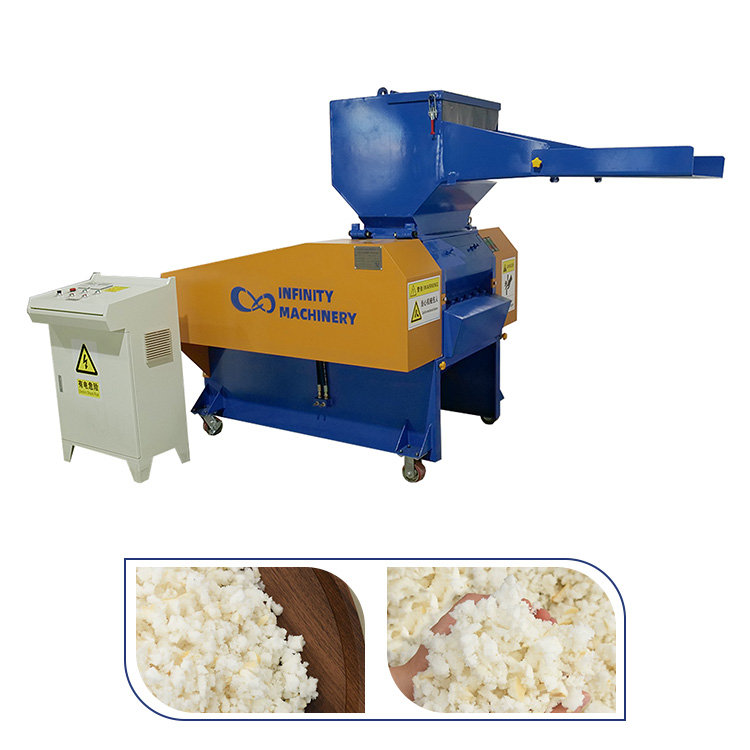
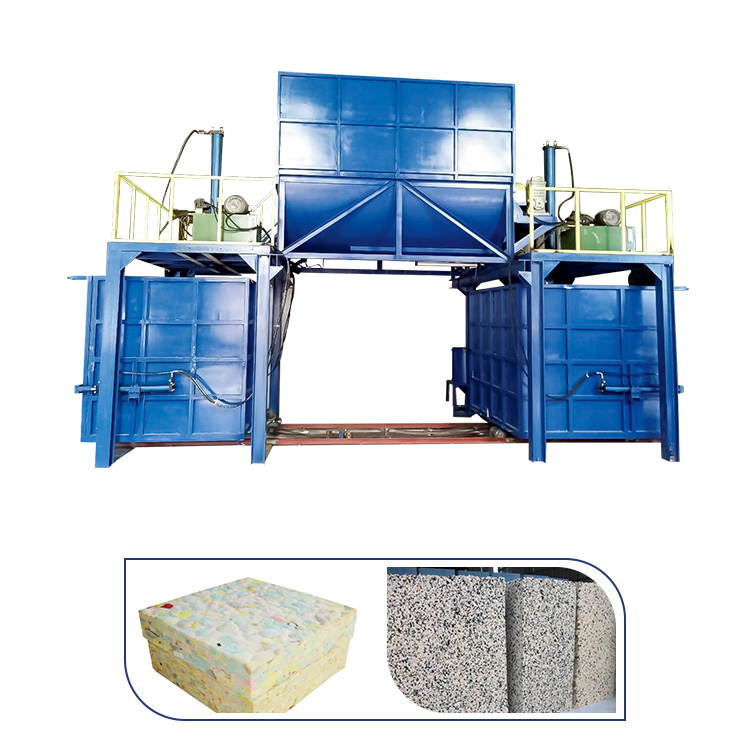
The foam scrap is the quiet revenue leak of the mattress factory: the cutting room trims the blocks and the trimmings fall into the bins, the quilting room cuts the panels and the offcuts join the pile, and the pile that grows each week is either the dumpster fee or the cash stream. The market value of the foam scrap depends on the form: the clean foam trimmings sell at the per-ton price to the recyclers, the crushed foam regrind sells at the higher price as the filler and the rebonded foam block sells at the premium as the product, so the value is the processing stage. The per-ton market is the decision tool: the clean scrap runs the hundreds of dollars per ton, the regrind doubles the value and the rebond block multiplies it again, and the factory that processes the scrap on site captures the value that the dumpster fee was costing. The crushing line is the conversion machine: the foam crusher reduces the trimmings to the regrind, the re-bonding machine presses the regrind into the new blocks and the rebonded foam feeds the mattress cores and the toppers, so the line turns the waste stream into the product stream. The IF-FFS3 Foam Crushing Machine, the IF-FZS1/2 Re-Bonding Foam Machine and the IF-QS2-1 Quilting Scrap Cutter are the machine cases this guide maps.
The scrap question starts with the market that exists for the foam waste, and the market prices the scrap by the form, the cleanliness and the volume. The clean trimmings are the base form: the white foam cutoffs from the cutting room, the dust-free offcuts from the quilting and the uncontaminated pieces from the panel cutting sell to the recyclers at the per-ton price, and the clean stream is the easiest to sell because the buyer can process it without the sorting; the clean scrap is the liquid form. The contaminated pieces are the discount form: the foam with the fabric backing, the adhesive residue or the mixed density sells at the fraction of the clean price and often goes to the dumpster because the sorting cost exceeds the value, so the contamination decides which pieces are the product and which are the fee; the dirty scrap is the sorting problem. The volume is the multiplier: the recycler buys the truckload not the bin, the weekly accumulation of the mid factory reaches the tonnage that makes the pickup worthThe market is the answer: the foam scrap has the real per-ton value and the processing stage multiplies it.
The per-ton market prices the foam scrap by the form and the region, and the export manager can use the ranges to build the scrap plan. The clean trimming price is the first range: the white flexible polyurethane foam trimmings trade at the 200 to 400 USD per ton in the domestic recycling markets, the high-density and the cleanest lots reach the 400 to 600 range The regrind price is the second range: the crushed foam particles sell at the 400 to 800 dollars per ton because the buyer skips the crushing step, the particle size and the consistency decide the premium and the regrind feeds the rebond plants and the pillow fillers, so the crush step doubles the value before the sale; the regrind is the processing premium. The rebond price is the third range: the rebonded foam block sells at the 800 to 1,200 dollars per ton as the product, the block feeds the mattress toppers, the gym mats and the packaging and the block price reflects the finished form, so the rebond conversion captures the highest value; the rebond is the product price..
Clean trimmings: the white PU foam trades at the 200-400 USD per ton domestically | High-density clean: the premium lots reach the 400-600 range | Crushed regrind: the particles sell at the 400-800 because the buyer skips the crush
The selling channels decide the price the factory actually receives, and the channels run from the local pickup to the processed sale. The local recycler is the first channel: the regional foam recycler picks up the accumulated clean scrap at the agreed per-ton price, the pickup saves the dumpster fee and the transport and the recycler processes the trimmings into the rebond or the filler, so the local channel is the simplest sale; the pickup is the low-touch option. The regrind buyer is the second channel: the rebond plants and the pillow factories buy the crushed foam at the higher per-ton price, the buyer wants the consistent particle size and the moisture-free lot, so the factory with the crusher sells the regrind at the premium and the crush step pays for the machine; the regrind buyer is the processing channel. The rebond product sale is the third channel: the factory that presses its own rebond blocks sells the blocks to the mattress makers, the gym mat producers and the packaging companies, the block sale captures the full product margin and the customer base is the same one the factory already serves,.
The rebond economics show why the processing beats the raw sale, and the math runs from the scrap volume to the block revenue. The scrap volume is the first number: the mid factory generates the 0.5 to 2 tons of the foam waste per week from the cutting, the quilting and the panel rooms, the annual volume reaches the 25 to 100 tons and the raw sale of that volume returns the thousands of dollars per year; the scrap volume is the revenue base. The conversion yield is the second number: the crusher reduces the trimmings to the regrind at the near 100% yield, the rebond machine mixes the regrind with the binder and presses the block, and the block volume tracks the input volume with the small binder addition, so the yield loss is the minimal binder and the process waste; the yield keeps the economics honest. The value lift is the third number: the raw trimmings at the 300 dollars per ton become the regrind at the 600 and the rebond block at the 1,000, so the on-site conversion multiplies the value by the three to five times and the annual revenue moves from the thousands to the tens of thousands; the lift is the processing margin. The cost side is the fourth number: the crusher and the rebond machine add the power and the labor, and the payback lands within the 12 to 24 months.
Scrap volume: the mid factory generates 0.5-2 tons of foam waste per week | Conversion yield: the regrind to block runs near 100% with the small binder addition | Value lift: the raw trim at 300 USD/ton becomes the block at 1,000 USD/ton
The machine fit builds the scrap-to-cash line, and the fit covers the three stages of the conversion. The crushing stage is the size case: the IF-FFS3 foam crushing machine reduces the trimmings and the offcuts to the regrind pieces, the consistent particle size is the buyer requirement and the crush output feeds both the regrind sale and the rebond input, so the crusher is the first stage of the value line; the IF-FFS3 is the size case. The rebond stage is the product case: the IF-FZS1/2 re-bonding foam machine mixes the regrind with the binder and presses the new blocks with the steam and the heat, the block density and the bond strength follow the recipe and the blocks leave the line as the sellable product, so the rebond machine is the conversion heart; the IF-FZS1/2 is the product case. The cutting stage is the prevention case: the IF-QS2-1 single needle quilting machine with the adjustable presser foot cuts the panels clean, the clean cuts keep the offcuts small and the small offcuts stay in the salable clean stream instead of the contaminated pile, so the quilting machine is the upstream guard of the scrap quality; the IF-QS2-1 is the prevention case..
The scrap protocol runs the dumpster-to-cash program in six steps, executed on the factory floor and tuned by the weekly revenue. Step 1: the source sorting, keeping the clean trimmings separate from the contaminated and the backed pieces at each cutting and quilting station, labeling the bins and the clean stream stays salable; the source sorting protects the value. Step 2: the weekly accumulation, consolidating the clean scrap into the storage area, tracking the weekly tonnage and the bin levels and scheduling the pickup or the processing at the volume threshold; the accumulation builds the truckload. Step 3: the crushing, running the foam crusher on the accumulated trimmings, confirming the consistent particle size and bagging the regrind for the sale or the rebond feed; the crushing is the value lift. Step 4: the rebond conversion, running the re-bonding machine with the binder recipe, confirming the block density and the bond and trimming the blocks to the product size; the rebond is the product conversion. Step 5: the sale, quoting the clean trimmings, the regrind and the blocks to the local recyclers and the product buyers, tracking the per-ton price and the monthly revenue and comparing the channels; the sale realizes the value. Step 6: the review, tracking the scrap volume, the contamination rate and the revenue per ton against the baseline and adjusting the sorting and the channel mix by the data.
The IF-FFS3, the IF-FZS1/2 and the IF-QS2-1 cover the crushing, the rebonding and the clean cutting of the scrap line,
Contact our team today for the per-ton value guide, the selling channel plan and the crusher and rebond line quote that turns your dumpster fee into revenue.