

1. The Hidden Bottlenecks of Legacy Mechanical Quilting
Operational BottleneckOutdated multi-needle and manual mechanical quilting rigs suffer from constant belt slippage, frequent thread snaps, and slow cycle times that drag down overall plant productivity. Factory owners face escalating maintenance bills and heavy reliance on hard-to-find veteran operators just to keep aging machinery running.
Mechanical Wear Analysis
- Root Cause of Downtime: Mechanical linkages and worn-out cam drives introduce slack, causing erratic stitch lengths and frequent needle deflections under load.
- Technical Solution: Replacing legacy gearboxes with modern servo-driven axes eliminates mechanical backlash and ensures consistent high-speed operation.
2. Maximizing Hourly Throughput with Servo-Driven Precision
Production SpeedModern production environments demand high velocity without sacrificing stitch integrity. By integrating advanced servo controllers on both the saddle and roller mechanisms, factories can achieve unprecedented quilting speeds while maintaining absolute pattern fidelity across thick multi-layer mattress panels.
Kinematic Efficiency
- Velocity Parameter: Older rigs cap out at restrictive RPMs due to vibration, whereas computerized systems sustain stable shaft speeds up to 3000 RPM.
- Technical Solution: Implementing rigid linear guide rails and balanced rotary hook boxes absorbs high-speed vibrational forces, doubling hourly output per shift.
3. Eliminating Fabric Scraps and Misalignment Defects
Material YieldFabric waste directly erodes profit margins in high-volume bedding manufacturing. Precise digital feeding mechanisms and real-time tension control prevent material puckering, stretching, and skewed panel patterns that normally result in costly waste.
Fabric Tension Stability
- Scrap Factor: Manual clamping and inconsistent fabric feeding often ruin expensive quilted ticking, leading to discarded panels.
- Technical Solution: Computerized clamping synchronization and automated tension sensors guarantee flawless pattern placement from the first inch to the last.
4. Reducing Operator Dependency through Intelligent Automation
Labor OptimizationSkilled labor shortages make continuous plant operation a major challenge for factory managers. Automated systems featuring optical thread-break sensors and self-diagnostic touchscreens minimize the need for constant manual monitoring and intervention.
Automation Parameter
- Operator Strain: Traditional machines require manual thread checking and immediate shutdown response, tying up skilled labor full-time.
- Technical Solution: Advanced infrared thread-break detection automatically halts the machine and saves pattern coordinates, allowing one technician to oversee multiple production units.
Essential Machinery for Scaling Production

Equipped with a German DURKOPP head and automatic thread break detection, supporting complex 360° jump-stitch and custom patterns for high-volume lines.
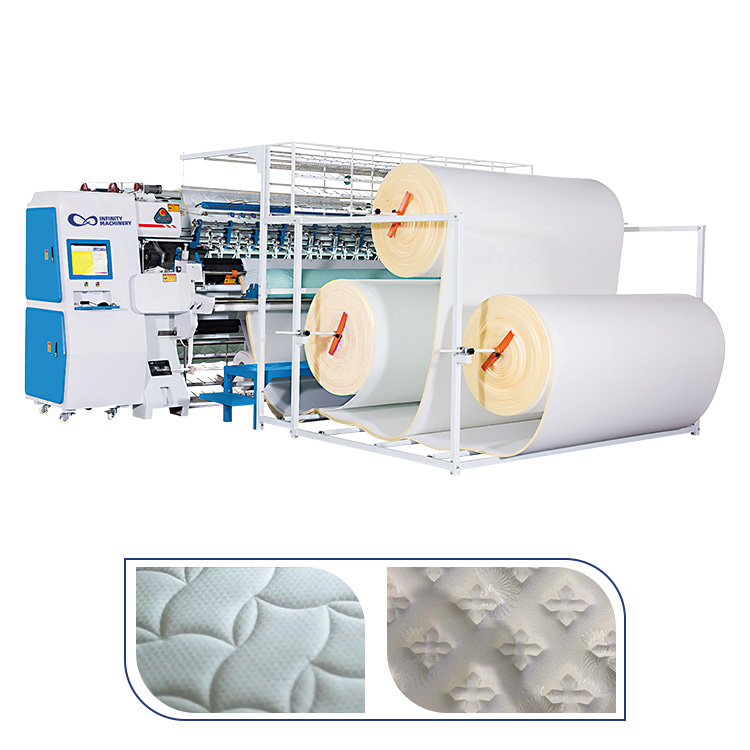
Features servo-driven rollers and infrared thread break detection for uninterrupted, high-precision multi-needle quilting tasks.
5. Integrating Panel Lines into Seamless Smart Factory Flows
Factory IntegrationPanel preparation is just one link in the broader manufacturing chain. Modern quilting units are engineered to interface directly with downstream automated cutting tables and stacking systems, creating an uninterrupted workflow across the CNC Mattress Panel Production Line.
Workflow Synchronization
- Bottleneck Transfer: Manual transfer between quilting and cutting stations creates inventory pile-ups and staging delays on the shop floor.
- Technical Solution: Automated conveyor integration and digital batch queuing ensure quilted panels move instantly to cutting without manual material handling.
6. Long-Term Maintenance Simplicity and Uptime Reliability
Equipment DurabilityPlant profitability hinges on machine uptime. Utilizing robust Computerized Mattress Quilting Machines equipped with automated lubrication systems and accessible modular components drastically reduces routine maintenance windows.
Maintenance Engineering
- Technical Solution: Sealed linear bearings, auto-oilers, and modular electrical sub-assemblies simplify routine upkeep and maximize daily operational uptime.
7. Calculating the Return on Investment for Plant Owners
Financial ROICapital investment in advanced machinery must deliver rapid payback. By cutting labor overhead by half, eliminating fabric scrap, and multiplying daily bed output, automated quilting systems transform panel preparation from a cost center into a primary profit driver.
Cost-Per-Bed Metric
- Financial Impact: High labor costs and slow cycle times inflate the production cost per mattress, eroding competitive pricing power in retail markets.
- Technical Solution: Accelerated throughput and zero-defect consistency rapidly amortize equipment costs, securing sustainable long-term manufacturing profitability.
Strategic Plant Upgrades for Maximum Profitability
Replacing slow, legacy manual quilting operations with automated, reliable equipment like Infinity Mattress Machinery is the definitive strategy for reducing cost-per-bed, maximizing output per shift, and securing long-term factory profitability in a competitive global market.
Ready to Modernize Your Factory Floor?
Speak with our manufacturing engineering team to design a custom high-efficiency production setup tailored to your facility.


