

1. The Limitations of Legacy Spring Coiling and Assembly Equipment
Mechanical BottlenecksOlder coiling machines suffer from severe thermal drift, inconsistent wire feeding speeds, and frequent mechanical jams that stall daily shift output. Modern factory owners must recognize that legacy equipment drives up scrap rates and creates dangerous dependencies on rare veteran operators.
Operational Bottleneck: Mechanical Fatigue
- Root Cause: Cam-driven legacy systems suffer from rapid gear wear and tension slippage when handling high-tensile steel wire.
- Technical Solution: Upgrading to modern Infinity Mattress Machinery eliminates mechanical play through high-torque servo motor integration.
Throughput Impact
- Downtime Factor: Manual adjustments consume up to 35% of daily shift hours.
- Technical Solution: Digital preset calibration allows immediate changeovers between different wire specifications without manual tool swaps.
2. Evaluating Wire Gauge Capacity and Tensile Strength Requirements
Material ParameterSelecting the correct machinery requires matching the coiling head's tolerance to high-carbon steel wire gauges ranging from 1.2mm to 2.5mm. Inadequate feed mechanisms lead to wire buckling, uneven coil heights, and compromised structural integrity across premium mattress builds.
Engineering Analysis: Tensile Stress
- Material Property: High-carbon spring steel requires robust feed rollers to prevent slippage during high-speed coiling.
- Technical Solution: Hardened alloy feed wheels with pneumatic clamping ensure positive traction and consistent wire feed rates.
Quality Control
- Inspection Metric: Coil diameter variance must remain within strict sub-millimeter tolerances.
- Technical Solution: Closed-loop sensor feedback automatically compensates for batch-to-batch steel hardness variations.
3. Optimizing Coil Geometry for Ergonomic Zoning and Support
Coil GeometryCoil geometry—whether barrel, offset, or continuous—directly dictates spinal alignment, motion isolation, and long-term durability. Precision machinery must seamlessly alternate between different pitch angles and turns to construct zoned support systems.
Design Dimension: Pitch Control
- Engineering Focus: Achieving uniform spring rate curves across varying coil diameters.
- Technical Solution: Multi-axis CNC coiling fingers execute complex geometrical transitions without manual intervention.
Ergonomic Standard
- Support Factor: Proper spring tempering ensures zero height loss under sustained cyclic loading.
- Technical Solution: Integrated heat-treatment synchronization locks in molecular memory during the coiling phase.
4. Transitioning to Servo-Driven Feeding and High-Speed Precision
Servo CalibrationTransitioning from mechanical linkages to independent servo drives for wire feeding, coiling, and cutting drastically increases hourly output. This digital transformation reduces component wear and guarantees absolute repeatability across large production runs.
Drive Mechanics
- Operational Principle: Decoupling the main shaft from auxiliary feeder mechanisms.
- Technical Solution: Dedicated servo controllers deliver instantaneous response times and eliminate backlash.
Speed Optimization
- Production Metric: Maximizing cycles per minute without sacrificing knot stability.
- Technical Solution: Optimized cam profiles and dynamic braking reduce settling time between operations.
5. Mitigating Hidden Operational Costs and Fabric/Thread Scrap
Waste ReductionInefficient machinery generates massive waste through misaligned cuts, thread breakages, and unrecoverable material scrap. Upgrading your plant infrastructure directly slashes raw material loss and improves overall operating margins per shift.
Economic Factor: Material Scrap
- Financial Impact: Edge fraying and bad cuts inflate annual raw material expenditure.
- Technical Solution: Automated thread break sensors and optical edge detectors halt operations instantly upon anomaly detection.
Consumable Efficiency
- Resource Management: Reducing adhesive and thread wastage in subsequent assembly stages.
- Technical Solution: Precision Automatic Production Line & Glue Spray Line integration ensures uniform material application.
Essential Machinery for Scaling Production

Features exclusive 0.5-inch needle distance and built-in border slitting device with full servo control for high-speed continuous quilting.
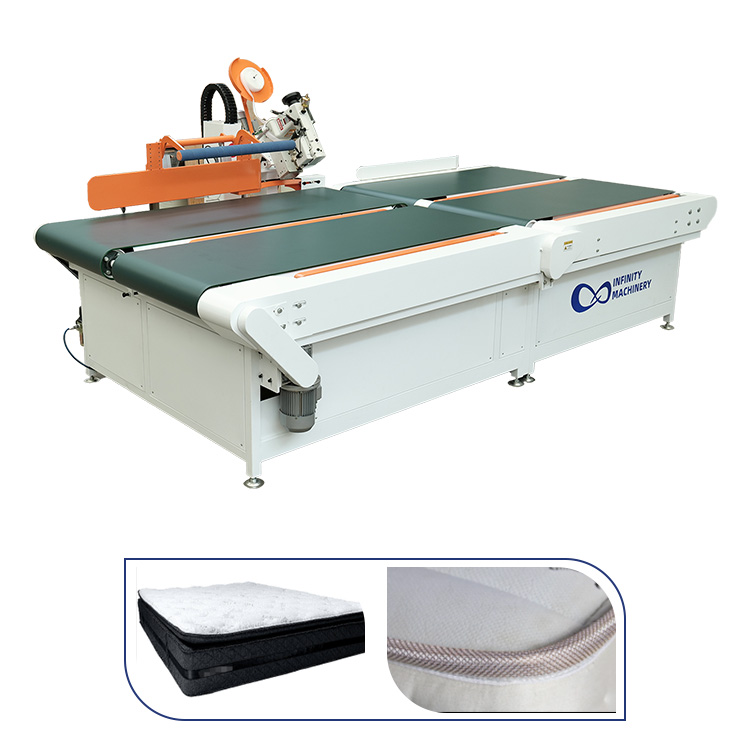
Totally automatic high-speed tape edge machine featuring robotic arms, automatic 90-degree turning, and PLC program control.
6. Plant Layout Integration and Upgrading Production Line Throughput
Plant LayoutSeamlessly integrating heavy coiling and quilting machinery into an existing factory floor requires optimizing material flow and minimizing forklift transit times. Modern modular machine design allows seamless connection between spring production, gluing, and tape-edge stations.
Layout Principle: Workflow Ergonomics
- Operational Flow: Eliminating bottlenecks between upstream coiling and downstream panel assembly.
- Technical Solution: Compact machine footprints and integrated conveyor systems streamline inter-station material transfer.
Capacity Scaling
- Output Goal: Doubling daily beds-per-shift without expanding physical factory square footage.
- Technical Solution: Synchronized line speeds match high-output quilting units with automated stacking and packaging equipment.
7. Long-Term Maintenance Simplicity and Minimizing Factory Downtime
Maintenance ProtocolPlant profitability relies heavily on equipment uptime and straightforward maintenance routines. Machinery engineered with centralized automatic lubrication, modular component access, and robust structural frames drastically reduces unplanned maintenance hours.
Diagnostic Step: Preventive Care
- Maintenance Focus: Mitigating wear on high-friction mechanical joints and sewing heads.
- Technical Solution: Automated oil delivery systems supply metered lubrication during active production cycles.
Operational Reliability
- Component Longevity: Using hardened tool steel and standardized electronic modules.
- Technical Solution: Quick-change sub-assemblies allow plant technicians to perform service swaps in minutes rather than hours.
Strategic Plant Investment Takeaway
Replacing slow, legacy manual operations with automated, reliable equipment is the definitive strategy for reducing cost-per-bed, maximizing output per shift, and securing long-term factory profitability. Partnering with industry leaders to integrate precise wire gauge control and advanced coil geometry ensures your manufacturing plant maintains a decisive competitive advantage in the global bedding market.
Ready to Upgrade Your Factory Production Line?
Contact our engineering experts today for custom plant layouts, equipment ROI analysis, and tailored manufacturing solutions.


