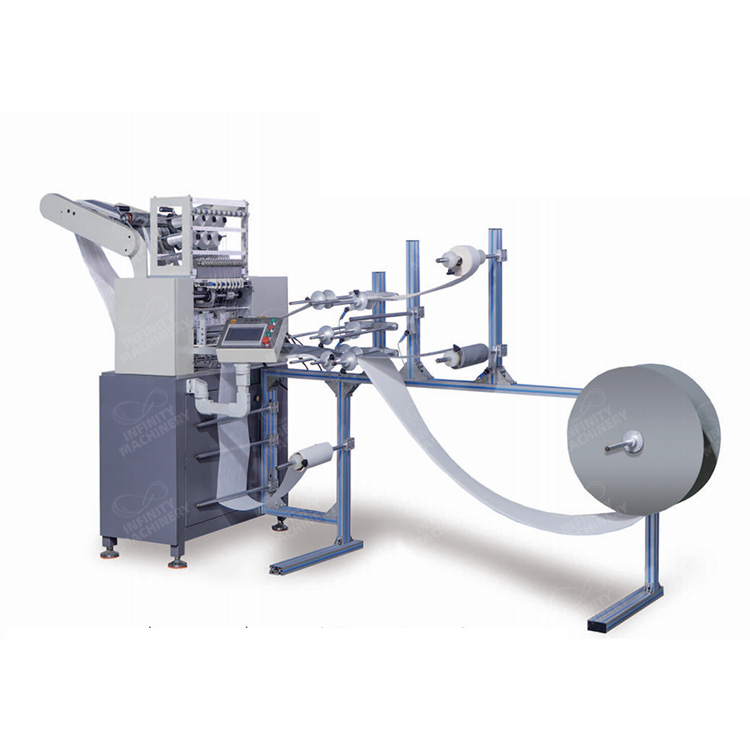
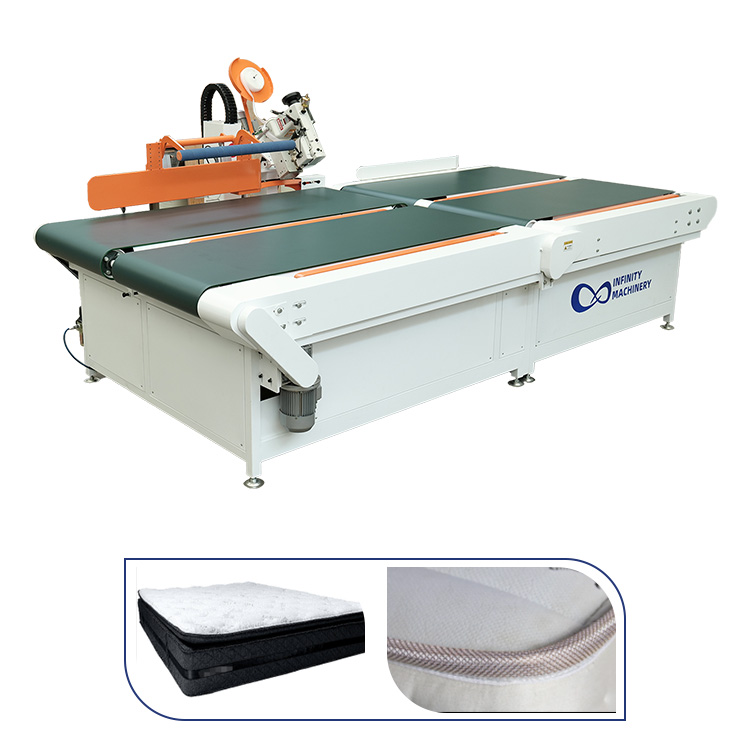
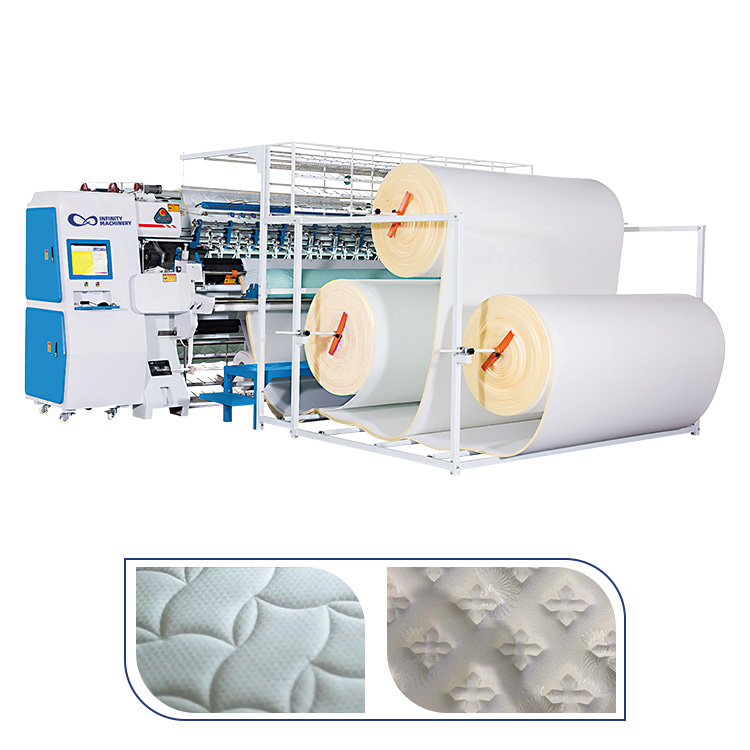
The skilled tape edge operator is the most valuable and the most fragile person in the mattress factory: the operator who knows the thread tension, the needle timing, the corner handling and the seam quality on the heavy borders is the one whose absence stops the line. The skill takes the months to learn and the years to master, the experienced operator is the rare commodity that the competitors poach, and the factory that depends on the single operator runs the risk of the whole line. The dependence is the business risk: the operator leaves, the line slows, the quality drops and the factory pays the recruiting and the training cost to replace the skill, again and again. The automatic tape edge machine is the answer that stops the dependence: the machine holds the thread tension, the timing and the seam geometry, the operator role shifts from the skilled hands to the machine tending, and the line runs without the dependence on the single person. The IF-SZX1 Linear Sewing Machine, the IF-T4 Automatic High Speed Mattress Tape Edge Machine and the IF-Q-1200 Computerized Chain Stitch Multi-Functional Quilting Machine are the machine cases this guide maps. This guide walks the skill shortage, the single-operator risk, the automation transfer and the workforce plan.
The dependence question is the risk that every mattress factory knows: the tape edge line runs on the skilled operator, and the skilled operator is the person who cannot be replaced in a week. The tape edge skill is the hard-won knowledge: the thread tension that varies with the fabric, the needle timing that changes with the wear, the corner handling that keeps the seam square and the eye that catches the crooked line before it ships. The skill is learned on the job, the months to reach the productive level and the years to reach the master level, and the skilled operator is the bottleneck person whose absence slows the whole line. The dependence is the hidden cost: the factory that runs on the single operator cannot schedule the operator absence, the vacation or the resignation, and the line that stops for the operator costs the output and the delivery. The dependence question is what the factory answers with the machines: the automatic tape edge machine holds the tension, the timing and the geometry in the program, the skill moves from the operator hands to the machine, and the line runs on the machine skill instead of the person skill. The automation is the dependence answer, and the sections below map the shortage, the risk and the transfer.
The dependence moves from the person to the machine, and the table is the automation argument.
The skill shortage is the supply side of the dependence, and the shortage has the three causes. Cause one is the learning curve: the tape edge skill takes the six to twelve months to reach the productive level and the years to master, and the young workers rarely stay through the long learning period, so the pipeline of the new skilled operators is thin. Cause two is the poaching: the skilled tape edge operator is the scarce resource across the mattress factories, and the competitor offers the higher wage and the better shift to the proven operator, so the skilled person leaves for the next factory and the next wage. Cause three is the demographic: the skilled generation ages out, the retirement takes the master operators and the replacement generation has not learned the skill, and the factory that trained the operators for the years sees the skill walk out the door. The shortage is the structural problem, not the temporary one: the factories compete for the same small pool of the skilled operators, the wage climbs and the dependence deepens. The shortage is the reason the automation is not the convenience but the necessity: the factory that cannot find the skilled operator runs the line on the machine that does not retire, does not get poached and does not take the vacation.
Learning curve: 6-12 months to productive, years to master, young workers rarely stay through | Poaching: competitors offer higher wages to the proven operator, the scarce resource moves | Demographics: the skilled generation retires, the replacement generation has not learned | The shortage is structural, and the automation runs on the machine that does not retire, get poached or take vacation
The single-operator risk is the concentration of the dependence, and the risk is the line that stops when the person is absent. The typical tape edge section runs one skilled operator on the border line, and the operator holds the skill that the line needs: the operator absence, the sickness, the vacation or the resignation, and the line loses the skill, the quality drops or the line stops. The risk is the cost chain: the line stops, the output falls, the delivery slips and the customer waits; the replacement operator is hired at the recruiting cost of the two to three times the monthly wage, trained for the months and still not at the master level; and the factory that loses the skilled operator pays the recruiting, the training, the output loss and the quality risk, all at once. The single-operator risk is the business case for the automation: the automatic machine moves the skill into the program, the operator role becomes the load and the monitor, and the absence of the single person no longer stops the line, because the trained loader or the second operator runs the machine with the same program. The risk reduction is the measurable value: the factory that removes the single-operator dependence protects the output, the delivery and the quality from the person risk, and the protection is worth the machine investment.
The risk table is the owner math, and the automatic line removes the cost of the person risk.
The automation transfer is how the skill moves from the operator hands to the machine program, and the transfer has the three steps. Step one is the knowledge capture: the machine supplier and the senior operator set up the machine for the factory materials, the thread tension, the needle timing, the corner indexing and the seam parameters are programmed and saved, and the settings become the standard program that runs the same quality every time. Step two is the role shift: the operator role changes from the hand-guiding to the loading and the monitoring, the operator loads the mattress, starts the program and watches the run, and the skill that the senior operator held in the hands is now held in the machine. Step three is the training transfer: the new operator is trained on the machine tending in the days, not the months, the program changeover is learned quickly and the quality standard is the machine standard, not the person standard. The transfer is the dependence removal: the machine holds the skill, the program holds the quality and the factory runs the line without the single person. The transfer also keeps the senior operator: the skilled operator becomes the setup person and the trainer, the role is elevated and the retention improves, because the senior person runs the programs and teaches the team instead of sewing the corners by hand.
The workforce plan is the management half of the dependence answer, and the plan builds the line that runs without the single person. The plan has the four parts. Part one is the cross-training: the loaders and the monitors are cross-trained on the machine tending, so the absence of the single operator is covered by the trained backup, and the line runs through the vacation and the sickness. Part two is the documentation: the setup programs, the changeover procedures and the troubleshooting guides are written and stored, so the knowledge is in the file, not only in the head of the senior operator. Part three is the automation roadmap: the tape edge line adds the automatic machines step by step, the skill moves to the programs and the dependence on the hand skill drops with every machine. Part four is the retention plan: the senior operators are kept with the elevated roles, the setup and the training positions, the wage and the shift structure that reduces the poaching, and the team that is stable keeps the knowledge in the factory. The workforce plan is the complement of the automation: the machines remove the dependence and the plan builds the team that runs the machines, and the factory with the plan runs the tape edge line through the person changes without the line stops.
The IF-SZX1, the IF-T4 and the IF-Q-1200 cover the linear, the tape edge and the quilting machines of the automation transfer, and the workforce plan builds the line that runs without the dependence. Contact our border team for the automation audit for your tape edge line, the setup-program service and the workforce plan that removes the operator dependence.
The implementation plan removes the dependence in five steps, run at the tape edge line. Step 1: the dependence audit, mapping the line roles, the single-operator points and the skill concentration, and naming the risk of the person absence. Step 2: the knowledge capture, working with the senior operator and the machine supplier to program the setups, document the changeovers and write the troubleshooting, so the knowledge moves to the file and the program. Step 3: the machine install, adding the automatic tape edge machine to the line, running the trials with the senior operator and the loaders, and confirming the quality and the cycle. Step 4: the cross-training, training the loaders and the monitors on the machine tending, the changeover and the basic fixes, and scheduling the backup coverage for the operator absence. Step 5: the plan review, measuring the line output and the quality for the month, confirming the dependence dropped and the retention held, and expanding the automation to the next line. The factory that runs the five steps stops the dependence, and the tape edge line runs through the person changes without the line stops.
The IF-SZX1, the IF-T4 and the IF-Q-1200 cover the linear, the tape edge and the quilting machines of the automation transfer, and the five-step plan removes the operator dependence on your line. Contact our border team for the dependence audit for your factory, the setup-program service and the workforce plan that keeps your line running.
Contact our border team today for the automation setup that removes the operator dependence: the dependence audit, the setup-program service and the workforce plan that keep your tape edge line running through every person change.