In a high-capacity 2026 mattress manufacturing facility, every minute of unplanned downtime on the finishing line bleeds profitability. When a mattress tape edge machine halts or produces defective seams, production managers need immediate, actionable diagnostic protocols—not guesswork. Shifting from panic to a structured engineering response minimizes your Mean Time To Repair (MTTR). This step-by-step troubleshooting guide deconstructs the most prevalent mechanical, pneumatic, and servo-logic faults, empowering your floor technicians to isolate issues rapidly and restore your factory's Takt time.
Determine if the fault is localized to the sewing head (thread snapping, skipped stitches) or the motion control system (carriage stuttering, failure to pivot at corners).
Inspect the physical pathways. Check the needle for deflections, verify the rotary hook clearance, and ensure the stainless steel guide rails are free from fabric debris.
For automated units like the IF-T4, verify the main air pressure is stable at 0.6-1.0MPA. A drop in pressure will immediately stall the robotic flipping arms.
If the carriage is out of sync with the needle speed, access the central PLC. Look for AI error codes related to servo overload or optical sensor blockages on the IF-T5.
| Machine Platform | Primary Diagnostic Zone | Common Fault Symptom | Immediate Resolution Step |
|---|---|---|---|
| IF-T2 Semiauto | VFD & Carriage Track | Uneven cornering speed | Clean rails; recalibrate VFD parameters |
| IF-T3T Industrial | Singer 300U Head | Thread tension / Heat buildup | Check auto-oil lines; clear bobbin lint |
| IF-T4 Robotic | Pneumatic Solenoids | Failure to flip mattress | Drain moisture trap; verify 0.6MPA pressure |
| IF-T5 Servo Elite | Optical Sensors & Servos | Stitch synchronization loss | Wipe infrared sensors; reboot PLC logic |
Never attempt to manually pull or force a heavy hybrid mattress through a servo-driven tape edge machine. Overriding the automated drive logic will strip the carriage timing belts, resulting in catastrophic synchronization failure and requiring a complete mechanical rebuild.
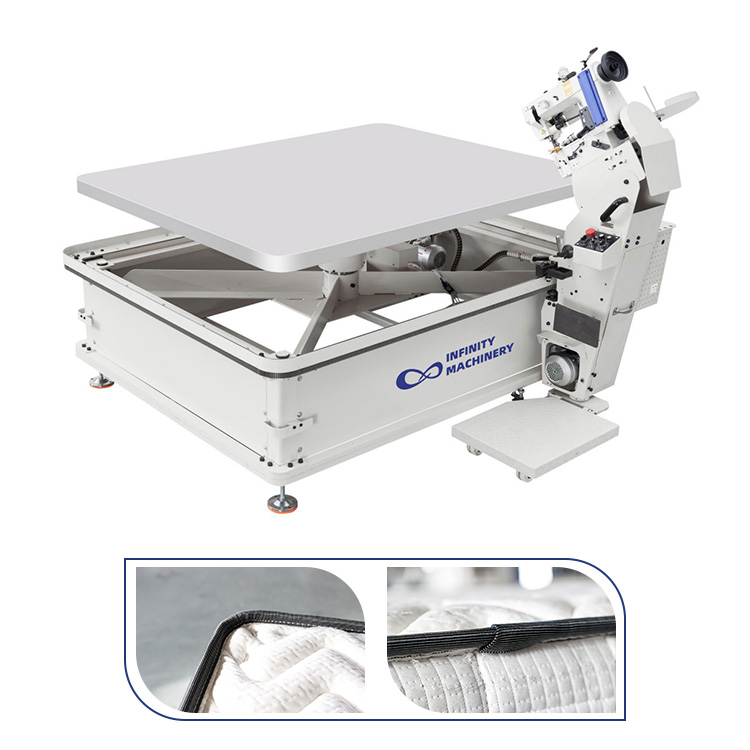
A pristine seam is non-negotiable. If your IF-T3T begins dropping stitches, the fault is almost always related to timing or tension dynamics.
• The Fix: First, replace the needle—micro-bends are invisible to the naked eye but disrupt the 1400RPM cycle. Next, verify the clearance between the needle scarf and the rotary hook tip. Finally, recalibrate top thread tension, which may be too tight for thick luxury borders.

When an automated machine fails to execute a smooth 90° pivot, the issue lies in the communication between the sensors and the motion drives.
• The Fix: On the IF-T5, check the AI-driven optical sensors for dust blockage. If the sensors are clean, access the PLC to ensure the "Corner Deceleration Parameter" hasn't been accidentally overwritten. Check the carriage track for physical obstructions.
Before bringing the machine back to full production speed, complete this technical verification:
Are your technicians spending more time troubleshooting legacy equipment than producing mattresses? It is time to audit your production floor. Infinity Mattress Machinery engineers the IF-Series for unparalleled reliability, utilizing self-diagnosing PLCs and robust servo architectures to eliminate chronic downtime. Upgrade your factory to 2026 standards.
Experiencing an unresolvable fault? Contact our global engineering team via WhatsApp for immediate remote diagnostic support.


