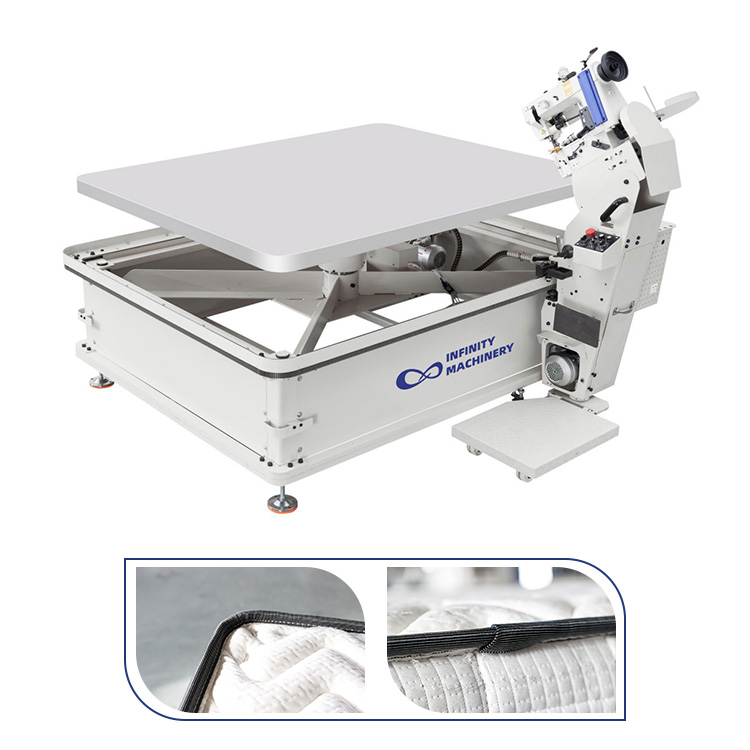
In the high-stakes environment of 2026 mattress manufacturing, a tape edge machine is more than a finishing tool—it is a critical asset that dictates your facility's Overall Equipment Effectiveness (OEE). While modern machines are engineered for rigorous 24/7 duty cycles, their longevity and precision rely heavily on proactive engineering care. Neglecting routine maintenance does not just cause minor delays; it leads to cascading mechanical failures, poor aesthetic stitching, and severe production bottlenecks. This comprehensive guide outlines the essential maintenance protocols, operational best practices, and advanced troubleshooting techniques required to maximize the lifespan of your industrial tape edge investment.
Friction is the enemy of 1400RPM sewing speeds. Ensure all moving linkages and rotary hooks are continuously lubricated. High-end models like the IF-T3T feature automatic oil supply systems that must be visually inspected weekly.
Daily removal of fabric lint and airborne dust is mandatory. For automated systems like the IF-T4, blocked optical sensors or contaminated pneumatic valves will disrupt the robotic flipping sequence.
Inspect the carriage drive belts and stainless steel guide rails for uneven wear or micro-stretching. Misaligned kinematic drives will cause the sewing head to stutter, leading to inconsistent cornering.
Heavy hybrid mattresses exert immense lateral force on needles. Routinely calibrate the needle bar height and presser foot tension to prevent thread breakage and throat plate strikes.
| Machine Model | Stitch Technology | Core Maintenance Focus | Optimal Capacity |
|---|---|---|---|
| IF-T2 Semiauto | Chain/Lock Stitch | Guide rail cleaning & VFD checks | 10-15 pcs/h |
| IF-T3T Industrial | Singer 300U Pro | Auto-lubrication fluid monitoring | 12-18 pcs/h |
| IF-T4 Robotic | PLC-Driven Fixed Head | Pneumatic pressure (0.6-1.0MPA) | 18-20 pcs/h |
| IF-T5 Servo Elite | Full Multi-Axis Servo | AI sensor calibration & Servo tuning | 15-25 pcs/h |
Do not override the machine's programmed speed logic. Forcing a mattress through the station faster than the synchronized conveyor speed will misalign the sewing head, cause severe needle deflection, and prematurely burn out the electronic clutch mechanisms.
Skipped stitches and snapped needles are primary indicators of mechanical misalignment or improper setup.
• Needle Size: Ensure the needle gauge matches the thickness of the 500mm luxury fabric. An undersized needle will snap under lateral load.
• Hook Timing: Recheck the synchronization between the needle and the rotary hook. Millimetric deviations here cause the thread to miss the loop.
• Thread Tension: Over-tensioning stresses both the needle and the top thread. Calibrate tension based on material density.

Irregular stitch lengths ruin the aesthetic finish of a mattress and point to failures in the material feeding mechanism.
• Feed Dogs: Inspect feed dogs for wear. Dull teeth fail to grip heavy materials, causing the fabric to stall while the needle continues.
• Presser Foot Pressure: Adjust pressure to match the loft of the quilting. Too loose causes slipping; too tight causes fabric bunching.
• Servo Optimization: Upgrading to a Full Servo System automatically synchronizes head speed with carriage movement, eliminating human error.
Empower your operators to protect the machinery with these daily operational standards:
A rigorous maintenance schedule transforms your mattress tape edge machine from a capital expense into a multi-decade asset. At Infinity Mattress Machinery, we engineer our IF-Series for maximum durability and provide the global technical support you need to keep production running flawlessly. Upgrade to 2026 industrial reliability today.
Need troubleshooting support or spare parts? Contact our engineering team for immediate diagnostic assistance.


