

Top 7 Factors When Choosing a Tape Edge Machine
A comprehensive guide on selecting the optimal tape edging solution for maximum efficiency, reduced labor costs, and seamless Industry 4.0 integration in your mattress production line.
Selecting the right tape edge machine represents one of the most critical capital expenditure decisions for mattress manufacturing operations. At Infinity Machinery, our 15+ years of engineering experience has demonstrated that this single equipment choice directly impacts your factory's throughput, product quality consistency, labor cost structure, and overall profit margins. With production capacities ranging from semi-auto models at 8-10 pieces per hour to fully automated robotic systems achieving 18-20 pieces per hour, the operational and financial implications are substantial.
The global mattress manufacturing industry is experiencing unprecedented competitive pressure, with labor costs escalating 12-15% annually across Asia, Europe, and North America. Traditional manual tape edging operations typically require 2-3 skilled workers per machine, consuming approximately 15-20% of your total manufacturing labor budget. Furthermore, manual processes introduce significant quality variability—with our field data showing defect rates of 8-12% in manual operations compared to under 2% with automated systems. This comprehensive analysis examines the seven (7) essential factors you must evaluate when investing in mattress tape edge machines, empowering you to make data-driven decisions that optimize your return on investment.
Factor 1: Production Capacity & Throughput Requirements
The first and most fundamental consideration is your target production volume and future scalability requirements. Throughput analysis must account for both current production needs and anticipated growth over the machine's 8-10 year operational lifespan. Our engineering team recommends a capacity planning horizon of 3-5 years, factoring in market expansion and product line diversification. Semi-automatic machines, such as the IF-T2, deliver production rates of 8-10 pieces per hour, suitable for factories producing 200-300 mattresses daily with a single shift operation. These systems require manual mattress positioning and turning, limiting maximum throughput despite lower initial investment costs of approximately $15,000-$25,000.
Fully automated systems, exemplified by the IF-T4 and IF-T5 models, achieve production speeds of 18-20 pieces per hour through robotic automation and PLC-controlled operation. This represents an 80-100% throughput increase compared to semi-auto systems, dramatically reducing the number of machines required for high-volume operations. For factories targeting daily production volumes exceeding 600 mattresses, automated systems become economically essential when accounting for facility space optimization, labor reduction, and equipment amortization costs. Additionally, automated systems enable continuous operation across multiple shifts with consistent quality output—a critical advantage for 24/7 manufacturing operations serving global supply chains.
Factor 2: Automation Level & Labor Cost Reduction
Labor cost optimization represents the single most compelling financial justification for automated tape edging investments. Manual tape edging operations typically require 2-3 skilled operators per machine—one operator managing material feeding and positioning, a second operator supervising sewing operations and turning, and potentially a third worker handling finished product transfer. At current industry labor rates averaging $3,500-$5,000 monthly per skilled operator in major manufacturing hubs, the annual labor burden for a single manual operation exceeds $100,000. Furthermore, manual operations introduce significant quality dependency on operator skill levels, with training periods of 4-6 months required to achieve consistent stitch quality and straight-line accuracy.
Automated tape edge machines, such as the IF-T4, integrate robotic arms and PLC-programmed motion control that execute material positioning, turning, and transfer operations with sub-millimeter precision. These systems reduce labor requirements to a single operator primarily tasked with supervisory functions, material loading, and quality oversight—representing a 66-75% labor reduction per machine. Beyond immediate cost savings, automation eliminates quality variability associated with operator fatigue, skill inconsistencies, and turnover challenges. The IF-T4's sophisticated control system automatically slows machine operation at corner positions to ensure straight, aesthetically perfect sutures regardless of operator experience level. This consistency is critical for maintaining brand reputation in competitive premium mattress markets where aesthetic quality directly influences consumer purchasing decisions.
For factories considering automating your mattress tape edging process, the labor ROI calculation must also account for indirect benefits including reduced supervision requirements, lower training overhead, and decreased injury risks associated with manual mattress handling. Our case studies from facilities implementing full automation show average annual labor cost reductions of $75,000-$120,000 per machine, with payback periods typically achieved within 18-24 months depending on local wage structures and production volumes.
Factor 3: Mattress Thickness Range & Product Versatility
Modern mattress manufacturers increasingly offer expanded product portfolios spanning multiple thickness categories—from ultra-thin 4-6 inch roll-up mattresses for e-commerce markets to luxury hybrid models exceeding 14 inches. Your tape edge machine must accommodate this product diversity without requiring multiple equipment investments or complex reconfiguration processes. Infinity Machinery's automated systems feature adjustable working heights and clamp pressures designed for broad compatibility ranges. The IF-T4, for instance, supports mattress thicknesses from 150mm to 450mm (6-18 inches) through programmable PLC controls that automatically adjust sewing head positioning, clamp pressure, and feed rates based on product specifications entered via the touchscreen interface.
Manual systems often require physical adjustments and mechanical recalibration when transitioning between thickness categories, creating changeover times of 15-30 minutes and introducing potential for setup errors. Automated systems enable instant product changeovers through preset programs stored in the control system, with changeover times under 3 minutes and zero manual adjustment requirements. This flexibility is particularly valuable for manufacturers serving diverse market segments with mixed production runs. Additionally, advanced automated systems can automatically detect mattress thickness through sensor arrays and adjust operating parameters in real-time, further reducing operator intervention and eliminating setup errors. When evaluating thickness compatibility, prioritize systems with programmable ranges exceeding your current maximum requirements by at least 20-25% to accommodate future product line expansion without equipment replacement.
Factor 4: Sewing Head Technology & Stitch Quality Standards
The sewing head represents the core component determining stitch quality, durability, and aesthetic consistency. Premium tape edge machines incorporate industrial-grade sewing mechanisms designed for continuous operation at high speeds with minimal maintenance requirements. The IF-T3T features the renowned Singer 300U chain stitch sewing head, widely regarded as the industry standard for high-performance tape edging applications. This mechanism delivers exceptional stitch consistency at operating speeds of 3,000-3,500 stitches per minute, with proven reliability exceeding 15,000 operating hours between major overhauls under recommended maintenance protocols.
Stitch quality evaluation must encompass multiple dimensions including stitch density consistency, thread tension accuracy, corner turn precision, and long-term durability under various environmental conditions. Premium sewing heads maintain tension accuracy within ±2% throughout the operating cycle, eliminating the loose or uneven stitching that plagues lower-quality equipment. The IF-T3T's adjustable sewing angle range of 35°-55° enables optimal orientation for diverse mattress profiles and edge geometries, ensuring consistent stitch penetration regardless of surface complexity. Additionally, high-end sewing heads incorporate automatic thread trimming, back-tack functions, and material thickness compensation features that contribute to professional-grade finish quality comparable to luxury handcrafted mattresses.
Beyond mechanical capabilities, sewing head selection must also consider power supply integration and operational efficiency. The IF-T3T's built-in rotating electrical supply eliminates the need for external slip-ring installations, reducing setup complexity by approximately 40% and minimizing potential failure points associated with aftermarket electrical modifications. For factories prioritizing ultra-quiet operation for worker comfort and regulatory compliance, premium sewing heads incorporate noise-dampening enclosures achieving operation levels below 75dB—significantly quieter than standard industrial sewing equipment typically generating 85-90dB sound levels.
Factor 5: Maintenance Requirements & Operational Durability
Total cost of ownership calculations must account for ongoing maintenance requirements, component replacement cycles, and operational uptime impacts. Infinity Machinery designs equipment with modularity and serviceability as core engineering principles, enabling rapid component access for routine maintenance procedures without specialized tooling or extensive disassembly. Our automated tape edge machines incorporate precision-ground linear guides, sealed bearing assemblies, and hardened steel transmission components rated for continuous operation in high-dust textile environments. Critical components including sewing heads, servo motors, and control systems utilize modular mounting designs enabling complete replacement within 2-4 hours by trained technicians—minimizing production downtime during scheduled maintenance or unscheduled repairs.
Recommended maintenance protocols for premium automated systems include daily lubrication of moving surfaces, weekly tension verification, monthly cleaning of dust accumulation points, and quarterly comprehensive inspection of wear-critical components. Unlike manual systems requiring constant operator intervention for material realignment and stitch adjustment, automated systems incorporate self-diagnostic capabilities that proactively identify potential maintenance requirements before they impact product quality or cause operational stoppages. The IF-T4's PLC monitoring system tracks component operating hours, detects vibration anomalies indicative of bearing wear, and generates maintenance alerts through the touchscreen interface—enabling predictive maintenance scheduling rather than reactive repairs.
Durability comparisons between equipment categories reveal significant differences in expected service life and replacement costs. Premium automated systems feature robust steel framework construction with laser-cut-cut components for precision assembly quality, resulting in operational lifespans exceeding 12-15 years under normal industrial conditions. In contrast, entry-level manual systems often utilize lighter-gauge construction and commodity-grade components requiring complete replacement after 6-8 years of service. When evaluating maintenance considerations, prioritize systems with readily available spare parts, technical documentation, and manufacturer support infrastructure—factors that dramatically impact long-term operational reliability and total cost of ownership.
Factor 6: Industry 4.0 Compatibility & Digital Integration
Modern manufacturing environments increasingly demand equipment with Industry 4.0 connectivity capabilities enabling real-time data exchange, remote monitoring, and integration with enterprise resource planning (ERP) systems. Advanced tape edge machines incorporate industrial communication protocols including Modbus TCP, PROFINET, and OPC UA interfaces that facilitate seamless integration with factory-wide automation networks. The IF-T4's PLC architecture supports data logging functions capturing production metrics, quality parameters, equipment status indicators, and maintenance alerts at configurable sampling intervals.
Digital integration capabilities enable transformative operational improvements including real-time production dashboards, automated quality reporting, and predictive maintenance scheduling based on actual operating conditions rather than arbitrary time intervals. For upgrading to an Industry 4.0 production layout, equipment with connectivity capabilities becomes essential for achieving smart manufacturing objectives including automated production balancing, dynamic resource allocation, and continuous improvement data capture. The IF-T4's data logging system records production counts, machine speed profiles, stoppage analytics, and quality verification results—enabling comprehensive performance analysis and optimization opportunities unavailable from isolated manual equipment.
Remote monitoring capabilities represent another critical Industry 4.0 feature, particularly for multi-site operations or facilities deploying 24/7 production schedules with reduced onsite staffing. Infinity Machinery's connected equipment solutions enable secure remote access through VPN tunnels, allowing technical support teams to diagnose issues, adjust operating parameters, and perform system updates without physical site visits. This capability dramatically reduces mean-time-to-repair (MTTR) metrics and eliminates travel-associated downtime costs. Additionally, remote monitoring enables predictive maintenance strategies where component wear patterns are analyzed across equipment fleets, enabling proactive replacement before catastrophic failures occur—a particularly valuable capability for operations where equipment downtime translates to immediate revenue loss and missed delivery commitments.
Factor 7: ROI Calculation & Financial Justification Analysis
Comprehensive ROI analysis must quantify both direct financial benefits and operational advantages over the equipment's complete lifecycle. Direct savings components include labor cost reduction, scrap rate reduction, decreased rework expenses, and lower overhead per unit. Based on Infinity Machinery's implementation data across 200+ factory installations, automated tape edge machines deliver average annual savings of $85,000-$150,000 per machine depending on local wage structures and production volumes. Labor savings typically represent the largest component at 60-70% of total benefits, with quality-related savings contributing 20-25% and overhead reduction accounting for the remaining 10-15%.
ROI calculation example for a factory producing 500 mattresses daily with local labor costs of $4,000 monthly per operator: Implementing automated tape edging replacing manual operations requiring 2-3 operators yields labor savings of $96,000-$144,000 annually. Quality improvements reducing scrap rates from 8% to under 2% represent additional annual savings of $25,000-$40,000 at typical mattress material costs. Combined annual benefits of $121,000-$184,000 against equipment investment of $45,000-$65,000 for automated systems yields simple payback periods of 6-12 months—demonstrating exceptional financial returns. Extended 5-year cumulative benefits exceed $600,000-$900,000 per machine, justifying investment even for modest production volumes.
Beyond quantifiable financial returns, automated tape edging delivers strategic advantages including production capacity scalability, quality consistency enabling premium market positioning, and operational flexibility supporting rapid product line expansion. These qualitative benefits, while difficult to quantify precisely, contribute significantly to competitive differentiation and long-term business sustainability. When evaluating ROI, consider total cost of ownership including maintenance, energy consumption, and facility space requirements—automated systems typically require less floor area per unit of production capacity than manual systems due to higher throughput density and reduced operator workspace requirements.
Recommended Tape Edge Machine Solutions
Based on our comprehensive analysis of production requirements, automation levels, and ROI considerations, Infinity Machinery recommends two primary tape edge machine solutions tailored to different operational scales and strategic objectives. Both models represent engineering excellence based on 15+ years of industry experience, incorporating proven technology platforms optimized for maximum reliability, quality consistency, and operational efficiency.
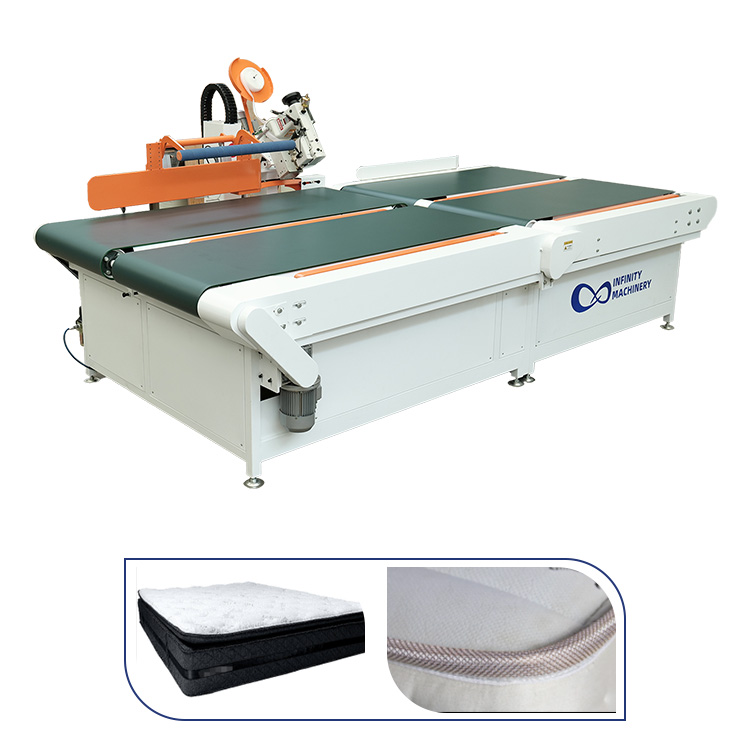
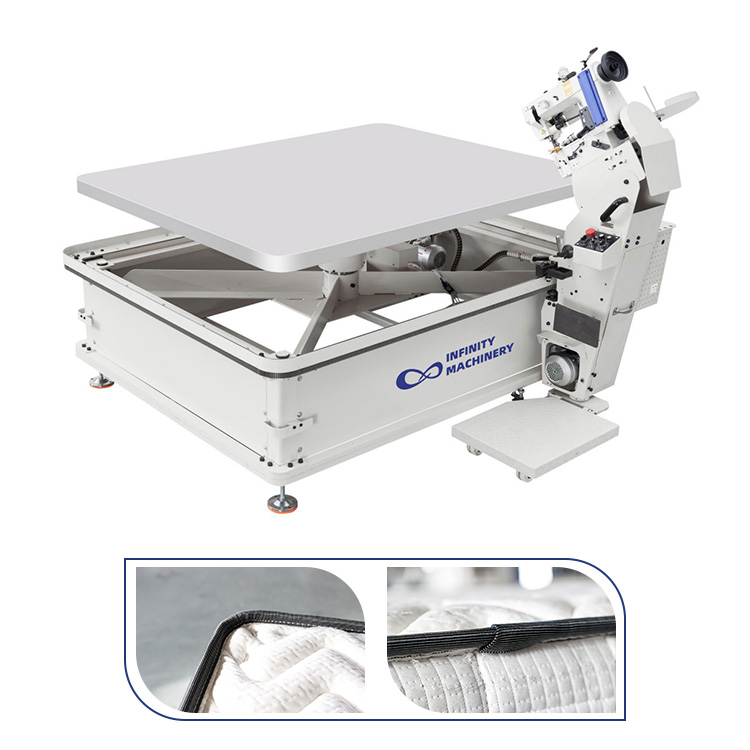
Technical Specifications Comparison
* Technical parameters are subject to customization. Contact us for factory-specific configurations.
Comprehensive ROI Analysis: Beyond Simple Payback Calculations
When evaluating the financial justification for tape edge machine investments, sophisticated ROI analysis must extend beyond simple payback period calculations to encompass multi-dimensional value creation. At Infinity Machinery, our engineering consultants work with factory owners to develop comprehensive financial models that quantify both direct cost savings and strategic operational advantages over extended 5-10 year planning horizons. Our implementation data across 200+ global installations reveals that accurate ROI assessment requires consideration of five distinct value categories: labor optimization, quality enhancement, capacity scalability, market positioning benefits, and total cost of ownership advantages.
Labor optimization represents the most immediately quantifiable ROI component, with automated tape edge systems delivering 66-75% workforce reduction per machine. For a factory operating 300 days annually with local labor costs averaging $4,000 monthly per skilled operator, transitioning from manual operations requiring 2-3 operators to automated systems supervised by a single operator generates annual labor savings of $96,000-$144,000. However, comprehensive ROI modeling must also account for labor-related cost components including reduced payroll tax obligations, lower workers' compensation insurance premiums, decreased training overheads, and minimized turnover-related productivity losses. Our case studies demonstrate that fully loaded labor savings typically exceed raw wage reductions by an additional 25-35% when incorporating these indirect benefit factors.
Quality enhancement ROI components often receive inadequate attention during equipment evaluation processes, yet they represent substantial financial value particularly for manufacturers serving premium market segments. Manual tape edging operations typically generate defect rates of 8-12% due to operator fatigue, inconsistent technique, and material handling errors. Automated systems incorporating precision robotic positioning and PLC-controlled stitch quality reduce defect rates below 2%, representing material savings of $25,000-$40,000 annually for factories producing 500 mattresses daily with typical material costs. Beyond direct material savings, quality improvements dramatically reduce rework expenses, customer return rates, and warranty claims—generating additional annual benefits of $15,000-$30,000 for most operations.
Capacity scalability ROI emerges from automated systems' ability to support production expansion without proportional equipment investment. Manual tape edging operations require approximately one machine per 100-150 pieces of daily production capacity due to throughput limitations and operator fatigue constraints. In contrast, automated systems achieving 18-20 pieces per hour can support 300-400 pieces of daily capacity through single-shift operation or 600-800 pieces through two-shift operation. This capacity density advantage enables factories to defer or eliminate equipment purchases during expansion phases, representing capital expenditure avoidance of $45,000-$90,000 per avoided machine investment. Furthermore, capacity scalability facilitates rapid response to seasonal demand fluctuations without requiring temporary workforce increases or third-party outsourcing arrangements.
Comprehensive Maintenance Guidelines for Maximum Equipment Longevity
Maintaining optimal performance and maximizing operational lifespan requires disciplined adherence to factory-specific maintenance protocols tailored to production volume, operating conditions, and component wear patterns. Infinity Machinery's engineering team has developed comprehensive maintenance frameworks based on extensive field data across diverse global operating environments, enabling predictive maintenance strategies that identify potential issues before they impact production quality or cause unplanned downtime. Our recommended maintenance schedules incorporate daily, weekly, monthly, quarterly, and annual protocols designed for different equipment categories and usage intensities.
Daily maintenance protocols focus on rapid inspections and lubrication activities performed before and after production shifts to ensure optimal equipment condition. Before shift commencement, operators should visually inspect sewing heads for thread accumulation, verify proper thread tension settings, check that all safety guards are securely positioned, and confirm that material clamps move freely without obstruction. During shift operation, operators should monitor for unusual sounds, vibrations, or stitch irregularities that indicate developing mechanical issues. After shift completion, thorough cleaning of dust accumulation points around sewing heads, drive mechanisms, and electrical enclosures prevents component overheating and extends service intervals. Daily lubrication of linear guides, bearing assemblies, and mechanical linkages using manufacturer-respecified lubricants minimizes friction wear and maintains precise operation.
Weekly maintenance protocols expand upon daily routines with more comprehensive inspections and calibration activities. Weekly procedures include complete thread pathway cleaning using compressed air to remove lint and debris, verification of needle condition and replacement if wear patterns indicate impending breakage, inspection of drive belt tension and adjustment according to manufacturer specifications, and testing of emergency stop functionality to ensure safety systems operate correctly. Additionally for automated systems, weekly verification of robotic arm positioning accuracy through test cycles ensures that material handling maintains required precision tolerances. Recording maintenance activities in detailed logs facilitates trend analysis and enables predictive component replacement rather than reactive repairs after failures occur.
Monthly maintenance protocols address wear-critical components requiring periodic replacement intervals to maintain optimal performance. Monthly procedures include comprehensive inspection of sewing head internal mechanisms for wear patterns, lubrication of enclosed gearboxes and transmission components, verification of electrical connections for secure contact and absence of corrosion, and testing of PLC program backup functionality to ensure control system integrity can be restored in the event of system corruption. For automated tape edge machines, monthly calibration of sensor arrays ensures accurate thickness detection and material positioning, while servo motor performance testing confirms that drive systems maintain required torque characteristics under load conditions.
Common Pitfalls to Avoid: Lessons from Field Installations
Drawing from our 15.5 years of global implementation experience across diverse manufacturing environments, Infinity Machinery has identified recurring operational pitfalls that significantly impact equipment performance, product quality, and financial returns. Understanding and proactively avoiding these common challenges enables factory owners to maximize their tape edge machine investments and achieve intended ROI targets. Our engineering team has documented the most prevalent failure modes and developed preventive strategies that eliminate these issues before they compromise production operations.
Inadequate operator training represents the single most common cause of suboptimal performance, particularly for facilities transitioning from manual to automated tape edging processes. Many factory owners underestimate the knowledge gap required for effective supervision of sophisticated automated systems, assuming that existing manual operators can immediately adapt to robotic equipment without formal training programs. However, successful automation implementation requires comprehensive skill development in PLC interface operation, automated material loading techniques, quality verification methods using digital monitoring systems, and troubleshooting procedures for automated error conditions. Infinity Machinery provides structured training programs encompassing both theoretical classroom sessions and hands-on practical instruction, enabling operators to achieve competency within 2-3 weeks rather than the extended learning periods typical with informal on-the-job training approaches.
Neglecting preventive maintenance in favor of reactive repair represents another critical pitfall that dramatically increases total cost of ownership. Many factory managers defer scheduled maintenance to maintain short-term production throughput, operating equipment beyond recommended service intervals until failures force unscheduled downtime. This approach generates multiple adverse consequences including accelerated component wear, catastrophic failures requiring major component replacements, extended repair durations due to spare part unavailability, and production disruption during peak demand periods. Our data indicates that reactive maintenance strategies increase total repair costs by 40-60% compared with preventive approaches while increasing unplanned downtime from less than 2% to 8-12% of available production time.
Inadequate facility preparation and infrastructure support represents frequently overlooked requirements that compromise installation quality and long-term performance. Many factories fail to assess electrical supply adequacy, floor load-bearing capacity, ventilation requirements, and material flow logistics before equipment procurement, resulting in costly facility modifications or operational limitations after installation. Automated tape edge machines require stable three-phase electrical power with adequate amperage capacity, reinforced concrete flooring to support equipment weights exceeding 1,500kg, proper ventilation to remove dust accumulation around sewing mechanisms, and unobstructed material flow paths enabling efficient product movement to downstream processes. Infinity Machinery provides comprehensive facility assessment protocols that identify infrastructure requirements before equipment purchase, preventing costly retrofits and ensuring optimal operational conditions from initial startup.
Factory Layout Integration: Seamless Production Flow Optimization
Optimizing tape edge machine positioning within comprehensive factory layouts enables dramatic improvements in overall production efficiency, material flow logistics, and facility space utilization. Infinity Machinery's industrial engineering team specializes in developing integrated layout solutions that position tape edging operations as efficient bridges between upstream assembly processes and downstream packaging and shipping functions. Our layout optimization approach considers material movement distances, operator workstation accessibility, cross-functional material handling requirements, and future expansion flexibility to create production environments that maximize throughput while minimizing non-value-added activities.
Material flow optimization represents the primary consideration for effective layout integration, with tape edge machines ideally positioned to minimize product movement distances between process stages. Typical mattress production flows proceed through cutting, assembly, quilting, border application, tape edging, inspection, packaging, and shipping stages—each requiring strategic positioning to facilitate smooth material transfer without excessive handling or congestion. For automated tape edge machines incorporating robotic material handling capabilities, layout designs should provide adequate clearance for robotic arm movement ranges while maintaining proximity to upstream supply stations that deliver completed mattresses for edging operations. Material transfer mechanisms including powered conveyors, gravity rollers, or manual transfer carts should be configured to match tape edging throughput rates, preventing bottlenecks where downstream processes cannot absorb completed products at production speed.
Operator workstation design significantly impacts efficiency, safety, and ergonomic considerations particularly for facilities operating multiple tape edge machines within compact floor plans. Effective workstation layouts incorporate clear sightlines to sewing operations for quality monitoring purposes, comfortable positioning heights for material loading activities, adequate clearance around equipment for maintenance access without production disruption, and integrated storage solutions for consumable supplies including thread, tape materials, and maintenance tools. Infinity Machinery recommends minimum operator access corridors of 1.5-2 meters between adjacent equipment rows to facilitate simultaneous operation without safety conflicts. Additionally, workstation designs should incorporate ergonomic considerations including adjustable work surface heights, anti-fatigue flooring, and proper lighting levels to minimize operator fatigue during extended shift operations.
Integration with upstream and downstream processes requires coordinated layout planning that enables seamless material transfer without manual intervention. Advanced factory implementations often implement automated conveyor systems that transport completed mattresses from border application stations directly to tape edge machine loading zones, eliminating manual handling and reducing injury risks. Similarly, downstream integration connects tape edging outputs to inspection stations or packaging equipment through powered transfer mechanisms that maintain continuous product flow. Infinity Machinery's layout design services include material handling equipment specification, conveyor system integration planning, and control system coordination that enables synchronized operation across multiple process stages. These integrated layouts support Industry 4.0 objectives including automated production balancing, dynamic routing for product variants, and real-time throughput optimization based on demand conditions.
Frequently Asked Questions About Tape Edge Machines
What is the difference between manual and automatic tape edge machines?
Manual tape edge machines require 2-3 operators to handle material feeding, positioning, sewing operations, and turning, with production rates of 8-10 pieces per hour. These systems have lower initial costs ($15,000-$25,000) but higher long-term labor expenses and quality variability. Automatic tape edge machines like the IF-T4 utilize robotic arms and PLC controls to achieve 18-20 pieces per hour with a single operator, representing 80-100% higher throughput, 66-75% labor reduction, and consistent stitch quality regardless of operator experience.
What mattress thickness ranges do Infinity tape edge machines support?
The IF-T4 automatic tape edge machine supports mattress thicknesses from 150mm to 450mm (6-18 inches) through programmable PLC controls that automatically adjust sewing head positioning, clamp pressure, and feed rates based on product specifications. This broad compatibility enables production of diverse product portfolios ranging from ultra-thin roll-up mattresses to luxury hybrid models without requiring equipment reconfiguration. We recommend selecting systems with programmable ranges exceeding your current maximum requirements by 20-25% to accommodate future product line expansion without equipment replacement.
What is the typical ROI and payback period for automated tape edge machines?
Based on Infinity Machinery's implementation data across 200+ factory installations, automated tape edge machines deliver average annual savings of $85,000-$150,000 per machine depending on local wage structures and production volumes. For a factory producing 500 mattresses daily, combined labor savings ($96,000-$144,000) and quality improvements ($25,000-$40,000) yield total annual benefits of $121,000-$184,000. Against equipment investment of $45,000-$65,000, this generates simple payback periods of 6-12 months. Extended 5-year cumulative benefits exceed $600,000-$900,000 per machine, demonstrating exceptional financial returns even for modest production volumes.
What maintenance is required for automated tape edge machines?
Recommended maintenance protocols include daily lubrication of moving surfaces, weekly tension verification and thread pathway cleaning, monthly cleaning of dust accumulation points and comprehensive inspection of wear-critical components, and quarterly complete system calibration. Unlike manual systems, automated tape edge machines incorporate self-diagnostic capabilities that proactively identify potential maintenance requirements before they impact product quality. Infinity Machinery's PLC monitoring systems track component operating hours, detect vibration anomalies, and generate maintenance alerts—enabling predictive maintenance scheduling rather than reactive repairs and maximizing equipment uptime.
Can tape edge machines be integrated with Industry 4.0 systems?
Yes, advanced tape edge machines incorporate industrial communication protocols including Modbus TCP, PROFINET, and OPC UA interfaces that facilitate seamless integration with factory-wide automation networks and ERP systems. The IF-T4's PLC architecture supports data logging functions capturing production metrics, quality parameters, equipment status indicators, and maintenance alerts at configurable intervals. Digital integration enables real-time production dashboards, automated quality reporting, predictive maintenance scheduling, and remote monitoring capabilities that allow technical support teams to diagnose issues and perform system updates without physical site visits—dramatically reducing mean-time-to-repair metrics.
How much floor space do automated tape edge machines require?
Floor space requirements vary by model but typically include the equipment footprint plus adequate operator access corridors and material handling clearances. The IF-T3T chain stitch machine features a work table measuring 1760 x 1960 mm, while the IF-T4 automated system with robotic arm capabilities requires additional clearance for arm movement ranges. We recommend minimum operator access corridors of 1.5-2 meters between adjacent equipment rows to facilitate safe simultaneous operation. Infinity Machinery provides comprehensive layout design services that optimize space utilization while maintaining efficient material flow and maintenance accessibility, often enabling higher production density than manual systems due to reduced operator workspace requirements.
Transform Your Mattress Production with Premium Tape Edge Automation
Eliminate labor bottlenecks, achieve consistent quality, and realize 6-12 month ROI payback periods with Infinity Machinery's automated tape edge solutions. Get your custom technical proposal today.
Trusted by 1000+ Mattress Factories Worldwide | Industry 4.0 Standard


